
Tennis Betting Sites UK: Choosing a UKGC-Licensed Platform in 2026
 Available in US
html
A few years back, I helped a friend set up his first tennis betting account. He picked a platform based on the biggest welcome bonus he could find. Within two months, he had discovered that the site offered no in-play tennis markets beyond match winner, the cash-out function was permanently unavailable on tennis, and the mobile app crashed during every Grand Slam evening session. The bonus was long gone. The frustration was not.
Choosing a betting platform is not a trivial decision for anyone serious about tennis wagering. The platform you use affects the odds you receive, the markets you can access, the speed at which you can execute live bets, and the tools available to manage your bankroll. In a market where 47% of UK adults have participated in some form of gambling in the last four weeks and 10% actively bet on sports online, the range of available platforms is vast — but the quality varies enormously once you move past the marketing.
This guide is not a ranking. I am not going to tell you which site is “best” because that depends entirely on what you need. Instead, I walk through the criteria that matter for tennis bettors specifically — licensing, tennis market depth, live-betting functionality, mobile performance, promotions reality, and responsible gambling tools — so you can evaluate any platform against your own requirements.
Contents
Why UKGC Licensing Is Non-Negotiable
Every conversation about choosing a UK betting platform starts and ends with one question: does it hold a valid UK Gambling Commission licence? There is no second question until this one is answered. An unlicensed operator offers no regulatory protection, no dispute resolution, no obligation to segregate your funds, and no accountability for fair pricing or timely payouts.
The UKGC licence is not a rubber stamp. It imposes specific operational requirements on every licensed operator: segregation of customer funds, anti-money-laundering procedures, identity verification, fair terms and conditions, and — since April 2026 — compliance with the statutory gambling levy. That levy, which requires online operators to contribute 1.1% of gross gambling yield, is projected to generate between 90 and 100 million pounds annually by 2027. It funds treatment, prevention, and research into gambling harm, and its existence means that every pound you wager on a UKGC-licensed platform contributes to a system of oversight that unlicensed operators bypass entirely.
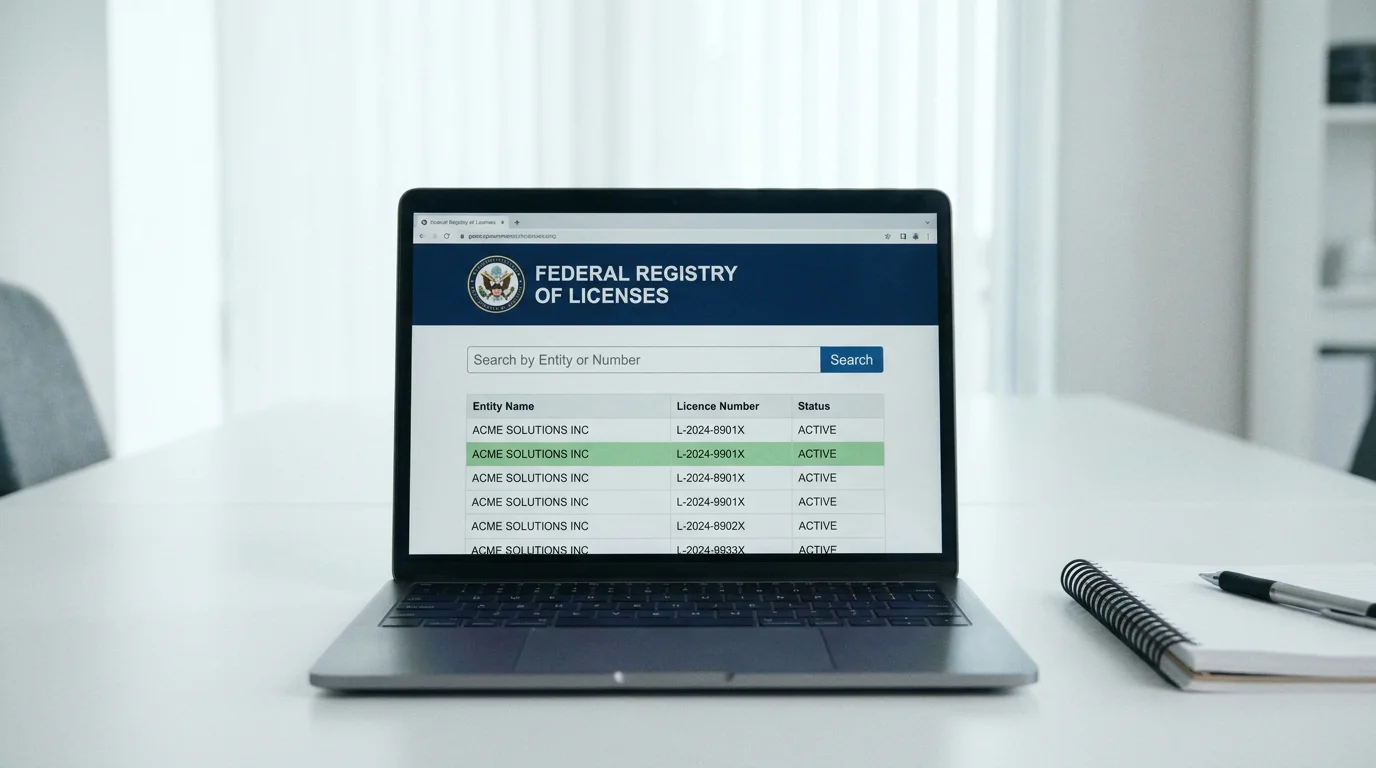
Verifying a licence takes thirty seconds. The Gambling Commission maintains a public register of all licensed operators on its website. Search by the operator’s name, and the register confirms whether the licence is active, what activities it covers (betting, casino, bingo), and whether any regulatory actions have been taken. If you cannot find the operator on the register, do not use it. This is not a grey area — it is a binary test.
One nuance worth understanding: some betting brands operate under a parent company’s licence. This is legitimate and common. The brand you use and the licence-holding entity may have different names. The register will show the legal entity, and the betting site’s terms and conditions will identify the licence holder. Check both.
The consequences of using an unlicensed operator are not hypothetical. Without UKGC oversight, you have no access to the Alternative Dispute Resolution (ADR) process that licensed operators must participate in. If a dispute arises over bet settlement, account closure, or withheld funds, you have no regulatory body to escalate to. Your funds sit on a server in a jurisdiction that may not recognise UK consumer protection law. The savings that an unlicensed operator might offer through slightly better odds or looser terms are entirely illusory when measured against the risk of having no recourse if something goes wrong.
Key Features to Evaluate for Tennis Bettors
I evaluate tennis betting platforms across five dimensions, weighted by how directly they affect my results. The order reflects priority — the first dimension matters more than the last, though all five contribute to the overall experience.
Odds competitiveness comes first because it has the most direct impact on long-term profitability. A platform that consistently offers odds 2-3% shorter than competitors is costing you money on every bet, regardless of how polished the interface looks. I compare prices on ten to fifteen tennis matches per week across the platforms I use, and the differences are material. The platform with the best tennis odds is not always the one with the biggest brand or the flashiest advertising.
In-play execution speed is second. For a sport where 90% of bets are placed live, the latency between clicking “place bet” and receiving confirmation is a critical performance metric. A delay of three to five seconds on a platform that frequently rejects bets because odds have changed is a platform that is functionally unsuitable for serious live tennis betting.
Market range is third. Does the platform offer game handicaps, correct set score, total games, and prop markets on the tennis events you care about? Some operators provide deep tennis coverage on Grand Slams but thin offerings on ATP 250 and WTA 500 events. If your strategy focuses on mid-tier tournaments (where the analytical edge is often larger), you need a platform that covers those events with more than just a match-winner price.
Cash-out availability and pricing is fourth. The ability to close a position mid-match is essential for risk management in live tennis. Not all platforms offer cash-out on all tennis markets, and the cash-out price can vary significantly from the theoretical fair value. Nearly a quarter of UK adults bet on sports online at least once a month, and 52% of the 25-34 age group are active participants — this is a mature market where operators compete on features, but cash-out quality is an area where the gap between the best and worst platforms remains wide.
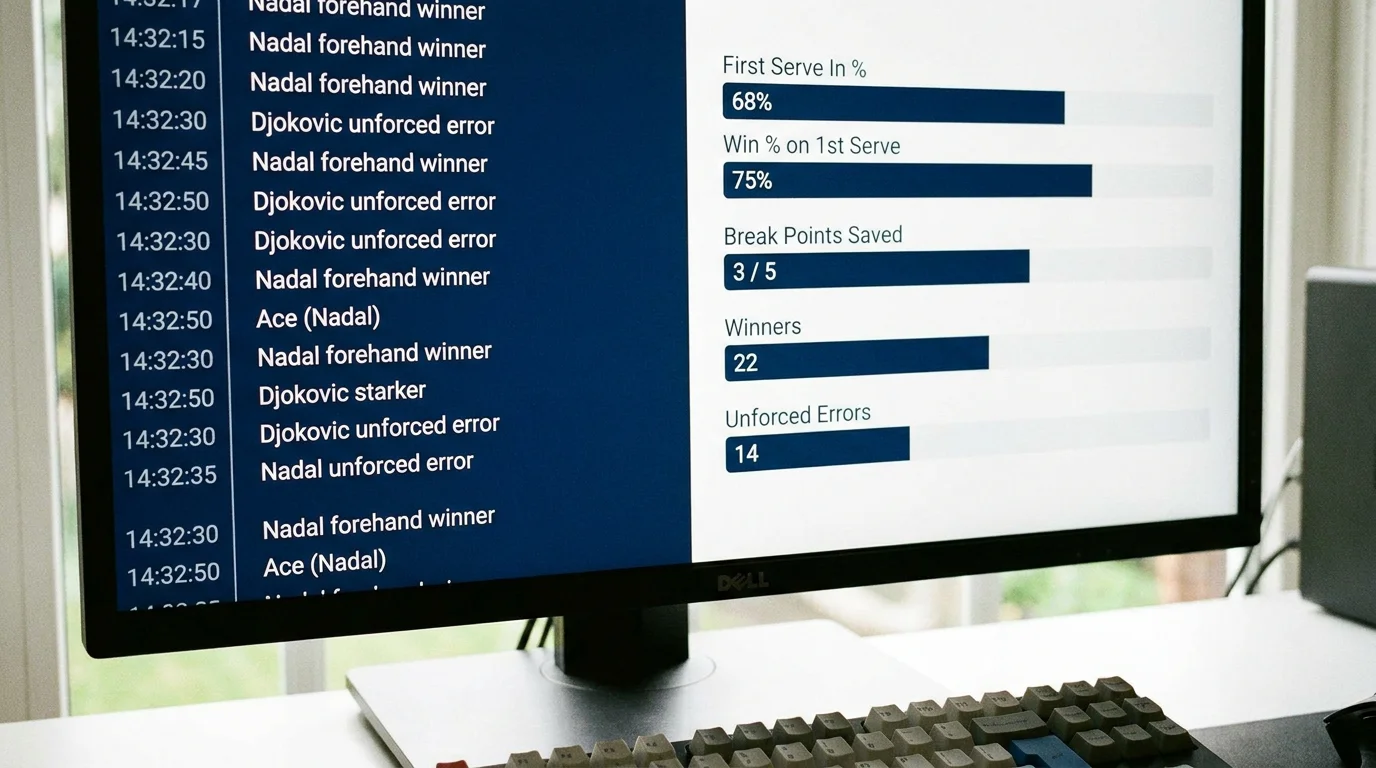
Data and statistics integration is fifth. Some platforms embed live match stats — serve percentages, break points, game-by-game scoring — directly into the betting interface. Others provide only a bare scoreline. For in-play tennis betting, having stats alongside the market reduces the need to toggle between apps and speeds up your decision-making.
Tennis Coverage Depth: Tournaments, Tiers and Markets
Tennis is the fifth most popular sport for betting across major global operators, but the coverage depth offered by UK platforms is not uniform. The difference between a platform that treats tennis as a core sport and one that treats it as an afterthought becomes obvious the moment you look beyond Grand Slam week.
Full-coverage platforms offer markets on ATP Tour events (250, 500, Masters 1000), WTA Tour events (250, 500, 1000), Grand Slams, the ATP and WTA Finals, and often extend into ATP Challenger and ITF events at the main-draw level. They provide pre-match and in-play markets across multiple bet types for each match, and they cover qualifying rounds at Grand Slams and Masters 1000 events.
Partial-coverage platforms offer markets on Grand Slams and Masters 1000 events but drop off sharply at the 500 and 250 level. In-play markets may be limited to match winner only, and qualifying rounds are typically absent. These platforms can still be useful for casual tennis bettors, but they are insufficient if your strategy involves lower-tier events or granular in-play trading.
The coverage question also extends to the WTA Tour specifically. Some UK platforms provide noticeably thinner WTA coverage compared to ATP, with fewer markets per match and less consistent live pricing. If WTA betting is part of your approach — and the analytical edge on the women’s tour is arguably larger because it attracts less sharp money — verify WTA coverage before committing to a platform.
A practical test I run when evaluating a new platform: check the market range on a mid-week ATP 250 first-round match and a WTA 500 quarter-final simultaneously. If the ATP 250 match has match winner, handicap, total games, and correct set score, but the WTA 500 match has only match winner and a basic handicap, the platform is deprioritising women’s tennis in a way that will limit your opportunities. The best platforms maintain consistent coverage depth across both tours at equivalent tournament tiers.
Live-market coverage depth is a separate consideration from pre-match coverage. A platform might list fifteen pre-match markets on an ATP 500 match but offer only match winner and next-set winner once the match goes live. If in-play trading is central to your strategy — and given that the overwhelming majority of tennis bets are placed live, it probably should be — test the live-market depth during an actual event before committing real stakes.

Bonuses and Promotions: What the Fine Print Hides
I have a rule about betting promotions: read the terms before you read the headline. The headline says “Bet 10 Get 30 Free.” The terms say: the free bet is paid as three separate 10-pound tokens, each valid for seven days, each usable only on selections at odds of 1.50 or greater, and the free-bet stake is not returned with winnings. That “30 free” is worth significantly less than 30 pounds in real terms.
Welcome offers are a standard feature of the UK market and can provide genuine value when used correctly — but the gap between the advertised value and the actual value is consistently wider than most new customers realise. The key variables in any promotion are: wagering requirements (how many times must you turn over the bonus before withdrawing), minimum odds restrictions, time limits, and whether the free-bet stake is returned with winnings (stake-returned offers are worth substantially more than stake-not-returned).
Tennis-specific promotions are less common than football offers but do appear, particularly around Grand Slam tournaments. Acca boosts on tennis selections, money-back specials if a player retires, and enhanced odds on specific matches are the most typical formats. Each of these has terms that modify the headline value, and evaluating them requires the same critical reading you would apply to any other financial offer.
My practical advice: use welcome offers when you are genuinely opening an account you intend to use regularly. Do not open accounts solely for the promotion and then abandon the platform — that pattern gets flagged and can lead to account restrictions across multiple operators. Treat promotions as a small bonus on top of a platform you have chosen for its core features, not as the reason for choosing it.

Payment Methods and Withdrawal Speed
Deposit methods on UK platforms are broadly standardised: debit cards (Visa and Mastercard), bank transfer, and e-wallets (PayPal, Skrill, Neteller) are available on virtually every licensed site. Credit card gambling has been banned in the UK since April 2020, so that option does not exist on any compliant platform.
Where platforms differentiate is withdrawal speed. Some operators process debit-card withdrawals within 24 hours; others take three to five business days. E-wallet withdrawals are generally faster — often same-day or next-day. If you are managing a bankroll actively and need access to funds between sessions, withdrawal speed is a legitimate factor in platform selection. I prioritise platforms that process to my preferred e-wallet within 24 hours, because tying up funds unnecessarily limits my ability to allocate capital to the best available opportunities.
Minimum deposit and withdrawal thresholds vary. Most UK platforms accept deposits from 5 to 10 pounds, and minimum withdrawals typically sit at 5 to 10 pounds as well. A few platforms impose higher withdrawal minimums or charge fees on certain withdrawal methods — always check before depositing.
One aspect that catches new bettors off guard is the verification process. UKGC regulations require operators to verify your identity before you can withdraw. This typically involves submitting a photo of a government-issued ID and a proof of address (utility bill or bank statement dated within the last three months). Some platforms request verification at registration; others wait until the first withdrawal. Completing verification early avoids the frustration of a delayed payout when you actually need to access your funds. I always verify my identity on a new platform before placing any bets — it takes five minutes and eliminates a potential bottleneck later.
For bettors managing bankroll across multiple platforms, the efficiency of moving funds in and out matters. A platform that takes five business days to process a withdrawal to your debit card is locking up capital that could be deployed elsewhere. Over a year of active betting, those delays compound into a meaningful drag on your ability to allocate capital to the best opportunities as they arise.
Mobile Experience for Live Tennis Betting
Ninety-five percent of online gambling in the UK happens from home, and 76% of the 18-24 age group use their mobile phone as the primary betting device. For tennis — a sport where the vast majority of bets are placed live — the mobile experience is not a nice-to-have. It is the primary interface through which most bettors interact with the market.
The gap between a good mobile tennis experience and a poor one is measured in seconds: seconds to load the in-play market, seconds to update the live odds, seconds to confirm the bet. On a platform optimised for live tennis, you should be able to navigate from the homepage to a specific in-play match market in under three taps and under five seconds. If the app takes longer than that, or if the in-play section buries tennis behind football and horse racing in a way that adds navigation time, the app is not built with tennis bettors in mind.
Stability during peak traffic is another critical test. Grand Slam quarter-final night sessions produce traffic spikes that stress even well-built platforms. I have experienced app crashes, frozen bet slips, and suspended markets during exactly the moments when live tennis betting is most active and most valuable. If a platform’s app cannot handle Grand Slam traffic reliably, it fails the most important performance test for a tennis bettor.

A deeper evaluation of what separates the best tennis betting apps in the UK from the rest covers design, notification systems, and biometric login speed — all factors that contribute to a seamless live-betting workflow on mobile.
Responsible Gambling Tools on UK Platforms
This section is not an afterthought and not a regulatory box to tick. Responsible gambling tools exist because gambling harm is real, measurable, and costs the UK economy between 260 million and 1.2 billion pounds annually. If you are serious about tennis betting as a long-term, disciplined activity, the tools that help you maintain control are as important as the tools that help you find value.
Every UKGC-licensed platform is required to offer deposit limits (daily, weekly, or monthly caps on how much you can deposit), loss limits, session time reminders, cool-off periods (temporary account suspension, typically 24 hours to six weeks), and full self-exclusion through GamStop (a minimum six-month exclusion from all UKGC-licensed operators). The quality and accessibility of these tools varies between platforms. Some bury them deep in account settings; others surface them prominently and send proactive reminders.
Since February 2026, UK operators have been required to conduct financial vulnerability checks when a customer’s net deposits reach 150 pounds within a rolling 30-day period. These checks are designed to identify customers who may be spending beyond their means. The process is largely automated and uses open-banking data or credit-reference information — it does not require you to submit payslips or bank statements in most cases, though enhanced checks at higher thresholds may involve more documentation.
The introduction of the statutory gambling levy in April 2026 has channelled significant new funding towards harm reduction. Baroness Twycross, the UK Gambling Minister, called it “a huge step forward for the sector” that will see “increased investment to expand projects and services to reduce harmful gambling.” For bettors, the practical impact is a regulatory environment that takes player protection more seriously than at any previous point — and platforms that invest in genuinely useful responsible-gambling tools, rather than performative ones, should be preferred.
I use deposit limits on every platform I operate on. Not because I lack discipline, but because discipline is a finite resource that depletes during losing runs and high-volume periods. A hard deposit limit removes the decision from the moment of temptation and ensures that no single bad session can damage my long-term position. If you take away one practical step from this entire guide, make it this: set a deposit limit before you place your first bet, and review it quarterly.

Frequently Asked Questions About Tennis Betting Sites in the UK
Articles
Written by the editors at bettennisonline.com.
