
Tennis Free Bets UK: How Welcome Offers Work and What to Watch For
 Available in US
html
Free bets are the oldest promotional tool in UK betting, and they are also the most misunderstood. A “free” bet sounds like risk-free money, but the mechanics — wagering requirements, stake-returned vs stake-not-returned structures, minimum odds thresholds — mean the actual value of a free bet is typically 50-70% of its face amount. I have claimed hundreds of free bets over eleven years and the pattern is consistent: they are worth having, but never worth as much as the headline suggests.
Forty-seven percent of UK adults have gambled in some form within the previous four weeks. For operators competing for that enormous audience, welcome offers and free bets are the primary customer acquisition tool. Understanding how they work — really work, past the marketing copy — is essential for any tennis bettor opening a new account.
Contents
How Tennis Free Bets Work: Stake-Returned vs Stake-Not-Returned
The two main free-bet structures in the UK are stake-returned (SR) and stake-not-returned (SNR), and the difference matters more than most people realise.
With a stake-returned free bet, you place a bet using the free bet token and if it wins, you receive both the profit and the original stake value in cash. This works identically to a normal bet — the only difference is that you did not risk your own money. If you place a £20 SR free bet at odds of 3/1, a win returns £80 total (£60 profit + £20 stake). The expected value of an SR free bet is approximately equal to its face value, minus the probability of loss.
With a stake-not-returned free bet — the more common type — you receive only the profit if the bet wins. The stake value is not returned to you. The same £20 SNR free bet at 3/1 returns £60 profit if it wins, not £80. The missing £20 is the operator’s built-in cost recovery on the promotion. The expected value of an SNR free bet is roughly 60-70% of its face value, depending on the odds at which you place it.
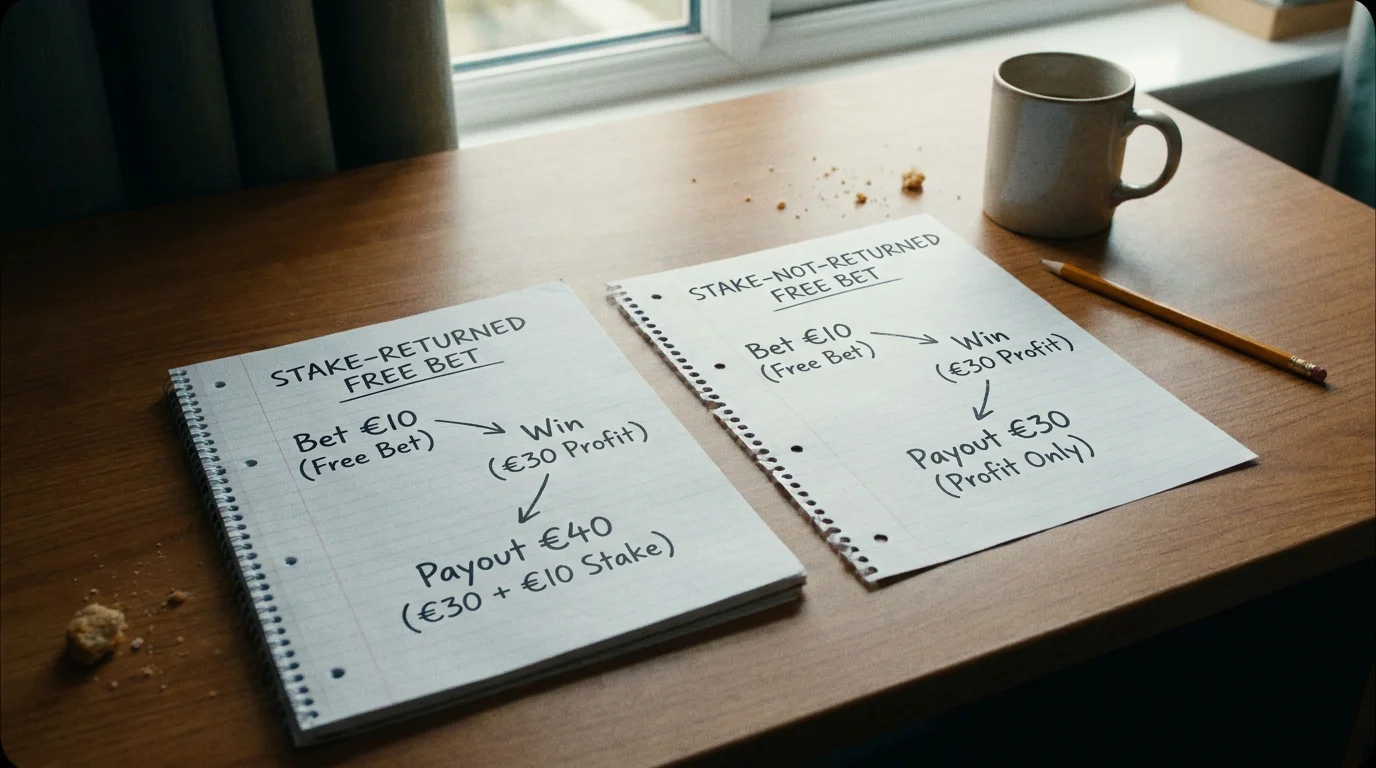
For tennis specifically, the practical implication is that SNR free bets should be placed at the longest odds you are genuinely comfortable with. Higher odds increase the profit-to-stake ratio, which maximises the value of a token where the stake is not returned. Placing an SNR free bet at 1/5 is mathematically suboptimal because the profit is only £4 on a £20 token. Placing it at 3/1 or longer extracts more value from the promotion.
Wagering Requirements Decoded
Wagering requirements — often called turnover requirements or playthrough — are the conditions you must meet before you can withdraw the proceeds of a free bet. A typical requirement is “3x wagering at minimum odds of 1/2”, which means you must place bets totalling three times the free bet value at odds of 1/2 or higher before any winnings become withdrawable.
Almost a quarter of UK adults bet on sport online at least once a month, and the operators know that most of those customers will not read the wagering terms carefully. That knowledge is built into the promotional design: the requirements are calibrated so that the average customer returns most of the promotional cost to the operator through their wagering activity before they are eligible to withdraw.

The minimum-odds threshold is the most commonly overlooked restriction. If the requirement says “minimum odds of 1/2” and you place a qualifying bet at 2/5, that bet does not count toward your wagering total. You have wagered your own money at unfavourable odds for no progress toward clearing the requirement. Always check the minimum odds before placing qualifying bets.
Time limits are the other critical constraint. Most free bets expire within 7-30 days of being credited. If you are waiting for a specific tennis tournament to start and the free bet expires three days before the first round, the token is gone. Plan your free-bet usage around the tennis calendar: if you are opening a new account, do it when a tournament you want to bet on is imminent, not during the off-season. The general framework for evaluating these offers connects to the broader assessment criteria for choosing a UK tennis betting site.

Applying Free Bets to Tennis Markets Effectively
The strategic question with tennis free bets is which market and which match to target. The optimal approach depends on whether the free bet is SR or SNR.
For SR free bets, treat them exactly as you would your own money. Place them on selections where your analysis identifies genuine value, at whatever odds that analysis suggests. There is no mathematical reason to deviate from your normal strategy with an SR token.
For SNR free bets, the calculus changes. Because the stake is not returned, you want to maximise the profit relative to the token value. This means targeting longer odds — not reckless longshots, but selections in the 3/1 to 8/1 range where you still believe there is genuine analytical justification. Tennis set betting and correct-score markets are natural targets for SNR free bets because the odds are inherently longer than match-winner markets.
One approach I have used with success: placing SNR free bets on first-set winner markets for matches where I have a strong view on the opening set but less conviction about the match outcome. First-set winner odds are typically 6/5 to 2/1 for the favourite and 7/4 to 3/1 for the underdog — a range that extracts reasonable value from an SNR token without requiring a longshot to land.

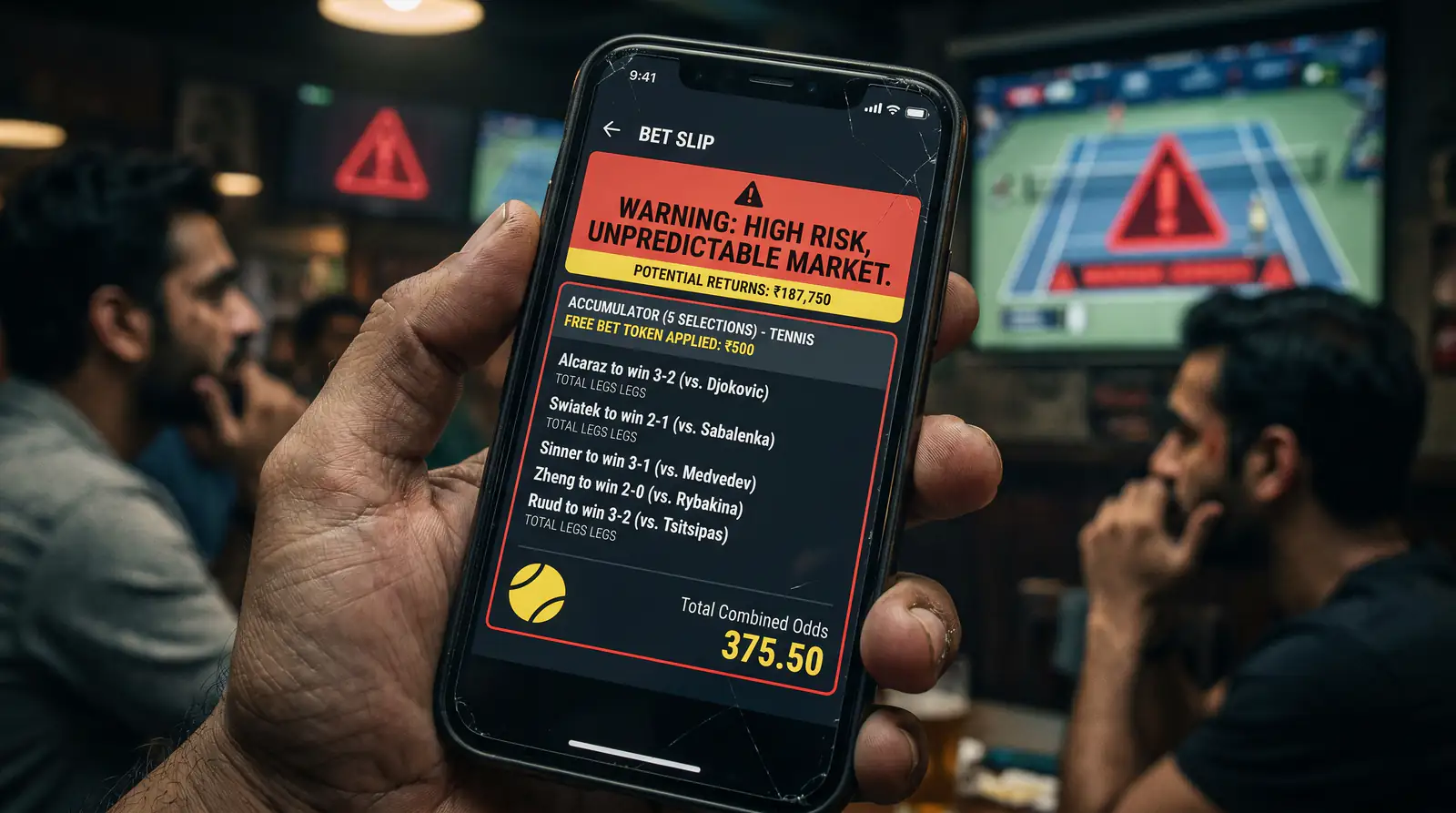
Avoid placing free bets on accumulators. The combined odds look attractive, but the probability of winning drops with each leg, and the free bet’s value is maximised on a single selection where you have the highest confidence in your analysis. The temptation to turn a £10 free bet into a five-fold acca at 50/1 is the operator’s preferred outcome, not yours.
Articles
Written by the editors at bettennisonline.com.
