
US Open Betting Odds: What Makes Flushing Meadows the Biggest Slam for Bettors
 Available in US
html
The US Open is, by betting volume, the biggest Grand Slam on the calendar. Not the most prestigious — that is Wimbledon. Not the most physically demanding — Roland-Garros holds that title. But when it comes to the amount of money flowing through the markets, Flushing Meadows leads. I have tracked my own US Open betting for a decade, and the returns consistently outperform the other Slams. The reason, I think, is the combination of late scheduling, night-session dynamics, and a time zone that perfectly serves UK bettors.
Contents
Why the US Open Leads Grand Slam Betting Volume
Entain’s trend report identifies the US Open as the most popular Grand Slam for betting across its platforms. The explanation is partly logistical and partly structural. The US Open falls in late August and early September, which means it arrives after the summer lull when the ATP and WTA tours are running at full intensity. Players have form samples from the North American hard-court swing — Cincinnati, Montreal, Washington — that give bettors real data to work with, unlike the Australian Open where off-season uncertainty clouds the picture.
The structural element is the night session. Flushing Meadows has offered prime-time evening matches since long before any other Slam adopted the concept. Those night sessions start at 7pm local time — midnight in the UK — and the marquee matches often do not begin until 9pm or later. For UK bettors, that timing means the biggest matches of the day are available at a time when they are still awake and engaged, even if it is late. Contrast this with the Australian Open, where semi-finals and finals play in the UK’s early morning hours.

Karen Moorhouse, CEO of the International Tennis Integrity Agency, has described the process of anti-corruption investigation as coming at both a financial and emotional cost to players involved. At the US Open, where the pressure on players is immense and the scrutiny is highest, the integrity infrastructure is correspondingly robust. For bettors, this means the main-draw markets at Flushing Meadows are among the most monitored and most reliable in tennis. The environment is not perfect — no major sporting event is — but the oversight is as strong as it gets.
New York Hard-Court Conditions and Night-Session Dynamics
The DecoTurf surface at Flushing Meadows plays medium-fast — faster than Roland-Garros clay, slower than Wimbledon grass, and roughly comparable to the Australian Open’s GreenSet in terms of baseline conditions. First-serve efficiency on hard courts averages 67.5%, the highest of any surface, and the US Open’s court speed sits close to that average.
But the night session changes everything. Under lights, the temperature drops, the humidity rises, and the ball moves differently through the heavier air. Night-session conditions at the US Open play noticeably slower than day-session conditions on the same court. Serve speeds drop slightly, rallies extend, and the match dynamic shifts toward the baseline player. If you are pricing a night-session match the same way you would price a day-session match, you are making a systematic error.

The noise at Flushing Meadows is a factor that does not exist at any other Slam in the same way. The USTA Billie Jean King National Tennis Center sits under a LaGuardia Airport flight path, and the crowds are famously vocal. This affects concentration-sensitive players disproportionately and can create in-play betting opportunities when a player’s rhythm is disrupted by crowd noise during a crucial service game. It is difficult to quantify, but after watching enough US Open matches, you develop a feel for which players thrive in the New York atmosphere and which ones shrink.

Time-Zone Advantage for UK Bettors
The US Open’s eastern time zone — five hours behind the UK — creates a practical advantage that gets overlooked. Day-session matches start at 4pm UK time. Evening sessions begin around midnight. This means UK bettors can follow the full day session during the afternoon and early evening, make informed in-play decisions while fully alert, and still catch the first set of the night session before bed.
Compare this with the Australian Open, where the day session starts at midnight UK time and the night session begins at 8am. Or Wimbledon, where the time zone is convenient but the matches are shorter (grass) and the in-play windows narrower. The US Open gives UK bettors the widest window of comfortable, awake betting time of any Grand Slam, which means more opportunities to find and act on in-play value.

The day-session window — roughly 4pm to 10pm UK time — is particularly valuable for in-play betting on lower-profile matches. While the casual public waits for the night-session headliners, the earlier matches on outer courts feature less public money and wider odds margins. If you have analytical depth on mid-ranked players and their hard-court form, the day session at the US Open is where that knowledge converts most directly into value. By the time the night session starts and the market floods with recreational money, the pricing on the marquee matches is already tight.
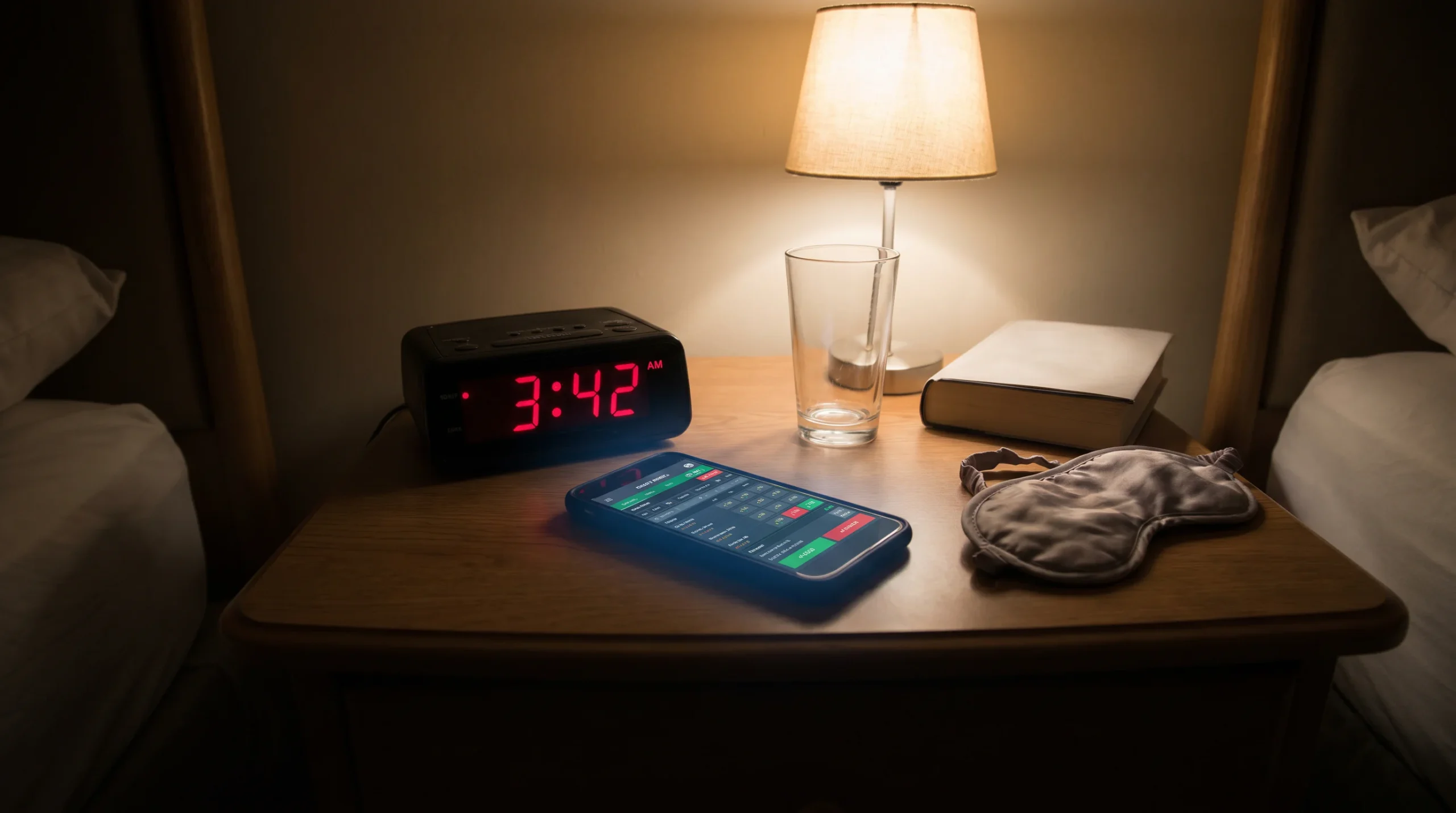
The late-night element is a double-edged sword, though. Betting tired is betting badly. If you are staying up until 3am to trade the last set of a night-session five-setter, your decision-making is compromised by fatigue. I have a personal rule: I close my positions before midnight and do not re-enter the market until I have reviewed the results with a clear head the next morning. The temptation to chase a live trade at 2am is strong; the outcomes of those late-night decisions are, in my experience, consistently worse than daytime decisions.
The US Open’s volume, night-session dynamics, and time-zone alignment make it the Grand Slam where UK bettors have the most natural edge. But that edge is only real if you exploit the structural advantages — day-vs-night pricing differences, crowd-factor analysis, and court-speed adjustments — rather than simply betting more because you can. The statistical framework for tennis betting applies at the US Open with particular force because the data is deepest and the markets are most liquid.
Articles
Prepared by the bettennisonline.com editorial staff.
