
Tennis Betting Markets Explained: Every Bet Type From Match Winner to Specials
 Available in US
When I started betting on tennis, I thought there were two markets: who wins the match, and who wins the tournament. It took about a month of actual trading to realise I had been looking at a fraction of the available playing field. The range of markets offered on a single Grand Slam match can exceed thirty distinct bet types — from match winner to correct set score to the number of aces in the second set. Each market prices a different dimension of the match, and each rewards a different kind of analysis.
Tennis generates roughly 3.5% of UK online bookmakers’ gross gaming revenue, a figure that has grown 24.5% since 2021. That growth has pushed operators to expand their tennis market offerings to attract the sport’s increasingly engaged audience. The result is a landscape where bettors can express almost any analytical view through a specific market — if they know where to look and how each market functions.
This guide maps the full terrain. I cover every major tennis betting market available on UK platforms, from the most straightforward to the most exotic, with mechanics, examples, and guidance on when each market is worth your attention. The structure follows the complexity curve: we start simple and build outward.
Contents
Match Result and First-Set Winner Markets
The match-winner market is where most people start, and for good reason — it is the simplest and most liquid tennis market. You pick which player wins the match. Two possible outcomes, one settlement, no complications unless a retirement occurs mid-match (at which point bookmaker-specific rules apply, and they vary).
Pricing in the match-winner market is driven by a combination of the bookmaker’s algorithmic model and the weight of money from other bettors. On a high-profile Grand Slam semi-final, the overround is typically tight — 103% to 105% — because competition between operators and high liquidity keep margins honest. On a lower-tier Challenger match, the overround can balloon to 108% or more because fewer bettors are trading the market and the bookmaker has less pricing pressure.
The first-set winner market is a separate proposition that settles after the first set concludes. It is useful in two scenarios: when you believe the match will be competitive overall but one player has a clear edge in the opening exchanges (players who start aggressively, for instance, or those with strong first-set records), and when you want to reduce your exposure to later-set variance. A first-set bet eliminates the unpredictability of deciders, fatigue, and mid-match tactical adjustments — you are betting on a shorter, more contained contest.
One pattern I track closely: players who consistently win the first set but lose the match. This happens more often than you might expect, particularly with big servers who dominate early when their serve is freshest but fade as the match lengthens. Backing these players in the first-set market while fading them in the match-winner market can be a profitable combination — a type of arbitrage on a player’s own performance curve.
The match-winner market is also where the retirement rule becomes relevant. Most UK bookmakers void match-winner bets if a player retires before the match is “officially complete” (definitions vary, but typically before one full set has been completed). Understanding your platform’s specific rules before placing a bet is not optional — it is essential.

Set Score, Game Handicap and Totals
Beyond the binary question of who wins, tennis markets let you bet on the structure of the victory — how many sets it takes, the margin in games, and the total number of games played. These markets reward a more granular analysis than match-winner alone, and they often carry less efficient pricing because fewer bettors engage with them deeply.
Correct set score requires you to predict the exact set score of the match — for example, 2-1 in a best-of-three or 3-1 in a best-of-five. The number of possible outcomes is larger (six in a best-of-three, ten in a best-of-five), which means the overround is typically higher than in match-winner markets. The payouts are correspondingly larger. A 2-1 correct set score on a closely matched best-of-three might price at 3.50 to 4.50, while a straight-sets 2-0 on a heavy favourite might sit at 1.70 to 2.00. The analytical skill here is assessing not just who wins but how the match is likely to unfold structurally — whether the losing player is good enough to take a set, and if so, which one.
Game handicap markets apply a points spread to the total number of games. A favourite priced at -4.5 games needs to win by a combined margin of five or more games across all sets for the handicap bet to land. So if the match finishes 6-3, 6-4, the favourite has won by five games (12 vs 7), and the -4.5 handicap wins. If it finishes 7-5, 6-4, the margin is four games, and the handicap loses. The detailed mechanics of tennis handicap betting cover the nuances in depth, but the core advantage is that handicaps let you express a view on the dominance of the victory, not just the result. In a market where 290 million online bets are placed monthly across UK platforms, handicaps attract serious volume because they offer a more calibrated risk-reward profile than a straight match-winner bet on a short-priced favourite.
Total games (over/under) markets set a line for the total number of games in the match. A typical best-of-three line sits around 21.5 to 23.5, depending on the players and surface. You bet on whether the actual total will exceed (over) or fall below (under) that line. Surface is the primary driver here: clay-court matches between two baseliners tend to produce higher game counts because the longer rallies create more competitive service games, while grass-court matches between big servers tend to produce lower totals with quick service holds and fewer breaks.
Set handicap markets work similarly to game handicaps but at the set level. A -1.5 set handicap on the favourite requires them to win in straight sets. This is a high-risk, higher-reward market that essentially asks: will the favourite dominate comprehensively enough to avoid dropping a set?

Outright and Futures: Pre-Tournament Wagers
Outright markets ask you to pick the winner of an entire tournament before it begins. Futures extend the timeframe further — backing a player to finish the year as world number one, to win a specific number of Grand Slams, or to reach a season milestone. Both market types tie up your capital for the duration of the event or season, which is the hidden cost most bettors underestimate.
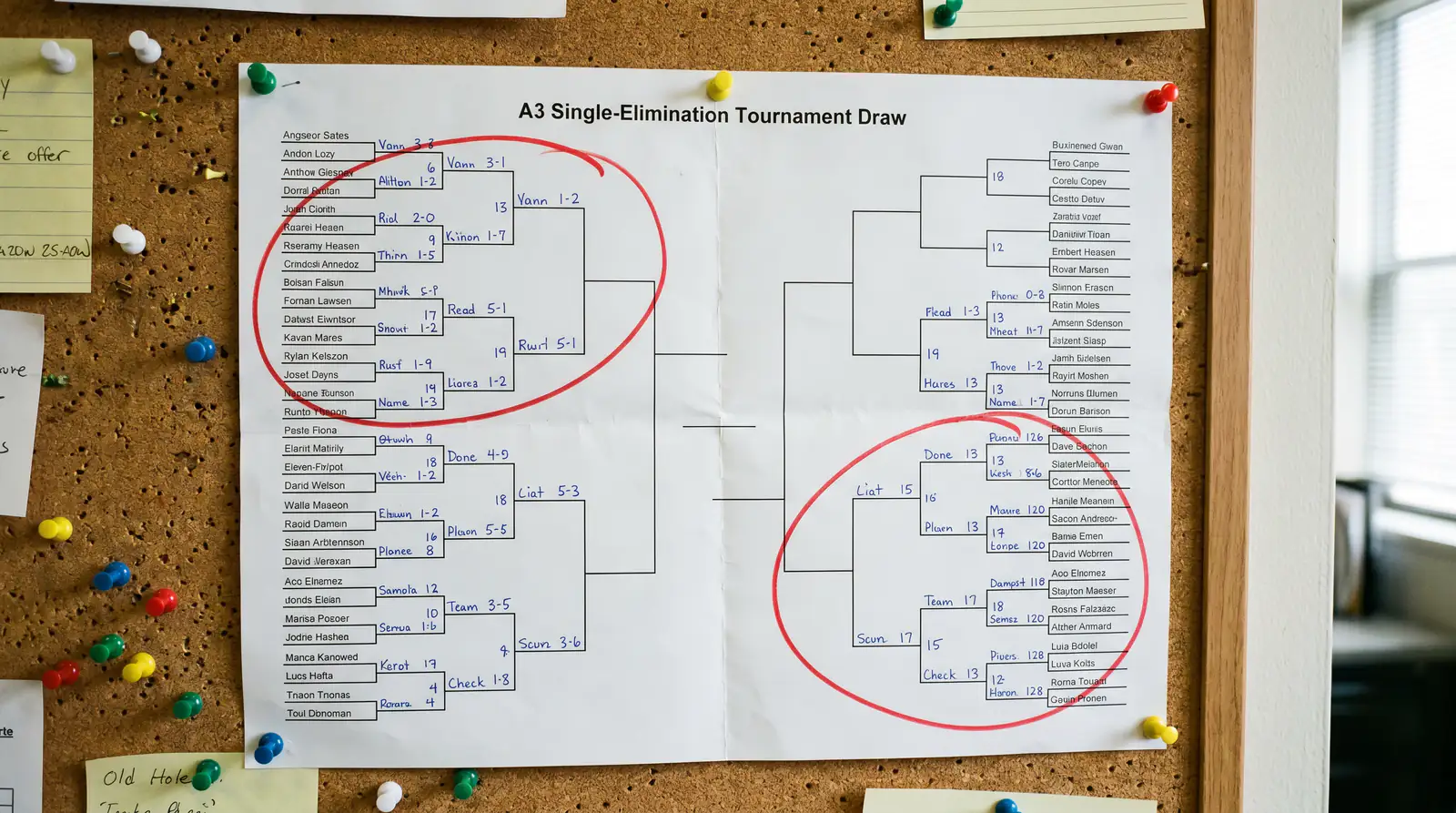
The outright market opens as soon as the draw is released for a tournament, and sometimes earlier as an ante-post market before the draw exists. Prices shift dramatically once the draw drops, because the path to the final — the specific sequence of opponents a player must beat — has an enormous effect on their probability of winning. A top seed drawn into a quarter with three dangerous floaters faces a very different prospect from the same seed drawn against qualifiers and players outside the top fifty in the early rounds.
The US Open is the most popular tournament for outright betting according to Entain’s trend data, while the French Open attracts more wagering volume than Wimbledon because its clay-court rallies produce longer matches and more in-play engagement that feeds back into outright interest. Each Grand Slam has a distinct outright profile: Wimbledon’s grass favours a narrower pool of realistic contenders (big servers and net-rushers historically dominate), while Roland-Garros on clay creates room for specialists who might not threaten on other surfaces.
Futures markets are a distinct beast. Backing a player to finish the year at number one requires an assessment of their entire season — injury risk, motivation across different surfaces, scheduling choices, and the likelihood of deep runs at multiple events. The capital lock-up is substantial: a futures bet placed in January does not settle until November. For that reason, I allocate no more than 5% of my annual bankroll to futures positions, and I treat them as long-term portfolio plays rather than standard bets.
The timing of your outright entry matters more than most bettors appreciate. Ante-post prices before the draw are typically longer because the uncertainty is maximal — you do not know the player’s path through the tournament. Once the draw drops, prices adjust sharply. A player drawn into a favourable quarter will shorten immediately; a player facing a brutal early-round opponent will drift. If your view on the tournament winner is formed before the draw (based on form, surface fit, and schedule freshness), the ante-post price offers better value. If your view depends on the draw itself, waiting is the correct play — but expect shorter prices.
Prop Bets, Player Specials and Bet Builders
Prop bets are the wildcards of tennis markets — individual propositions that do not fit neatly into the standard match-result framework. Will there be a tie-break in the match? How many aces will Player A serve? Will either player win a set 6-0? These markets price specific events within a match, and they are growing rapidly in availability on UK platforms.
The most commonly offered tennis props include: total aces by each player (or combined), total double faults, whether the match will include a tie-break (and sometimes, how many), first-set total games, and whether either player will win a set to love or to one. Some platforms also offer player specials tied to statistical milestones during specific tournaments — reaching a certain number of aces in the event, for instance.
Bet builders (also called same-game multis) let you combine multiple selections from a single match into one bet. A typical tennis bet builder might combine: match winner + over 22.5 total games + at least one tie-break. The selections are priced together, accounting for the correlation between them — because the outcomes are not independent. A match that goes over 22.5 games is more likely to include a tie-break than one that finishes under 20 games, and the bet builder pricing reflects that correlation.
The analytical edge in prop markets and bet builders comes from specialist knowledge. If you have tracked a player’s ace rate by surface over the last twenty matches, you are better positioned to assess an aces-over line than a bookmaker model that uses a broader average. Similarly, if you know that a specific head-to-head matchup has produced tie-breaks in four of the last five meetings, the tie-break prop may be underpriced. The data is available; the question is whether you are willing to do the work to exploit it.
A word of caution: bet builders carry a combined margin on each leg, and the total overround on a three-leg bet builder is typically higher than on any individual market. The eye-catching potential payout can obscure the fact that the underlying pricing is less favourable than placing the same bets separately. I use bet builders selectively — only when the correlation between legs works in my favour and the combined price offers genuine value over separate bets.

Which Markets Appear at Which Tournament Tiers
Not every tennis match comes with thirty markets attached. The range of available bet types depends heavily on the tournament tier, and understanding that hierarchy saves you from searching for markets that simply do not exist at lower levels.
Grand Slams sit at the top. The four majors — Australian Open, French Open, Wimbledon, US Open — offer the widest market range on every match, from first-round qualifiers to the final. You can expect match winner, correct set score, game and set handicaps, total games, first-set markets, prop bets, bet builders, and live markets down to the point level on featured courts. The depth reflects the commercial significance of these events. The 2026 Australian Open drew more than 1.2 million spectators to Melbourne Park — a new attendance record — and the Victoria state tourism minister Steve Dimopoulos noted that many millions more were watching from home. That global engagement translates directly into betting volume, and operators respond with comprehensive market coverage.
Tennis is the fifth most popular sport across Entain’s global brands, and the market coverage at the Masters 1000 and ATP 500 level reflects that standing. Masters events (Indian Wells, Miami, Madrid, Rome, Shanghai, Paris, Montreal/Toronto, Cincinnati, Monte Carlo) offer near-Grand-Slam market depth on the main draw, though qualifying-round coverage is thinner. ATP 500 events provide solid coverage — match winner, handicaps, totals, correct set score, and basic props — but point-level live markets are less consistent.
ATP 250 and WTA 250 events represent the lower boundary of comprehensive coverage. Match-winner and basic handicap markets are standard; correct set score and props are available on some platforms for main-draw matches but often absent in qualifying or early rounds. Live market depth drops notably — you may find only match-winner and next-set-winner in-play, rather than the granular game-by-game markets available at higher tiers.
Challenger and ITF events occupy the bottom tier. Market availability is sparse: match winner and occasionally a basic handicap or total-games line. Live markets are minimal or non-existent. The liquidity on these matches is low, the overround is wide, and the integrity risks (well-documented by IBIA at the lower-tier level) are higher. I trade Challenger markets very selectively and only when my analysis provides a specific, data-backed edge that overcomes the wider margin.

Matching the Right Market to Your Analysis
The mistake I see most often — and made myself for years — is defaulting to the match-winner market regardless of what your analysis actually says. If your research tells you that a favourite will win but the match will be tight, the match-winner price on a 1.35 favourite offers thin value. The analysis is not pointing you towards match winner. It is pointing you towards the correct set score (2-1 or 3-2 at more attractive odds), a game handicap where the underdog covers, or an over-totals bet that captures the expected competitiveness.
The principle is straightforward: your analysis produces a specific insight, and you should select the market that most precisely matches that insight. A view on dominance points to handicap markets. A view on match length and competitiveness points to totals. A view on a player’s first-set strength points to the first-set winner market. A view on who wins the tournament points to the outright. Forcing a nuanced analysis into a blunt match-winner bet is leaving precision — and often value — on the table.
I categorise my pre-match analyses into four types, each mapped to a primary market. Type one: I have a strong view on who wins and by what margin — this maps to game handicap. Type two: I have a strong view on who wins but expect a competitive match — this maps to correct set score (favouring a three-set line in best-of-three or a four-or-five-set line in best-of-five). Type three: I have no strong view on the winner but I have a view on the match structure — this maps to total games or tie-break props. Type four: I have a strong view on one player’s form trajectory over a tournament — this maps to outright or round-of-exit markets.
This categorisation system has one critical benefit: it stops me from betting when my analysis does not translate into a specific market view. If I cannot place my analysis into one of the four types, I do not have a bet — regardless of how interesting the match looks on paper. The market menu is deep. The discipline is in choosing the right item, not in ordering everything.

Frequently Asked Questions About Tennis Betting Markets
Articles
Created by the "bettennisonline.com" editorial team.
