
Hard Court Tennis Betting: Neutral-Surface Analysis for the Majority of the Tour
 Available in US
html
Clay gets the romance. Grass gets the prestige. Hard courts get the volume – and for bettors, volume is what matters. More than 60% of ATP and WTA tour events are played on hard courts, which means the majority of your betting opportunities across any given season will involve this surface. I have heard bettors dismiss hard courts as “neutral” or “boring” compared to the tactical extremes of clay and grass. They are wrong. Hard courts carry their own analytical depth, and the indoor-outdoor split within the surface category creates pricing opportunities that many bettors overlook entirely.
My hard-court betting has consistently produced the most stable returns of any surface segment in my portfolio. Not the highest ROI – that belongs to clay transition weeks – but the most predictable, the most consistent, and the easiest to model. The sheer volume of hard-court data available makes probability estimation more reliable, and the surface’s moderate pace rewards all-round players in ways that make match outcomes more predictable than on the specialist surfaces. This guide covers the statistical profile of hard-court tennis, the critical indoor-outdoor distinction, and the calendar implications for your betting activity.
Contents
Statistical Profile of Hard-Court Tennis
Hard courts sit between clay and grass on almost every statistical dimension, which is precisely why they reward balanced players rather than specialists. First-serve efficiency on hard courts averages 67.5% – higher than clay at 62.4% and grass at 64.2%. That might seem counterintuitive given that grass is the “fast” surface, but the explanation lies in bounce consistency. Hard courts produce a predictable bounce that allows servers to target their spots with greater accuracy than the variable bounce of grass or the heavy kick of clay.
The higher first-serve efficiency translates into more service holds, which means fewer breaks per match compared to clay. But unlike grass, where serve dominance can produce entire sets with no break points, hard courts still generate enough return opportunities to reward aggressive returners. The break frequency sits in a middle range that makes matches competitive without being chaotic – and competitive matches are where accurate probability models earn their keep.
Ace counts on hard courts are moderate. You will see fewer than on grass, where the low bounce gives returners less reaction time, and more than on clay, where the high bounce and slow pace allow returners to neutralise powerful serves. Double-fault rates follow a similar middle pattern. For bettors, this moderate variance means that over/under game totals on hard courts are easier to estimate than on either specialist surface, because the scoring patterns are less extreme and the data distributions are tighter.
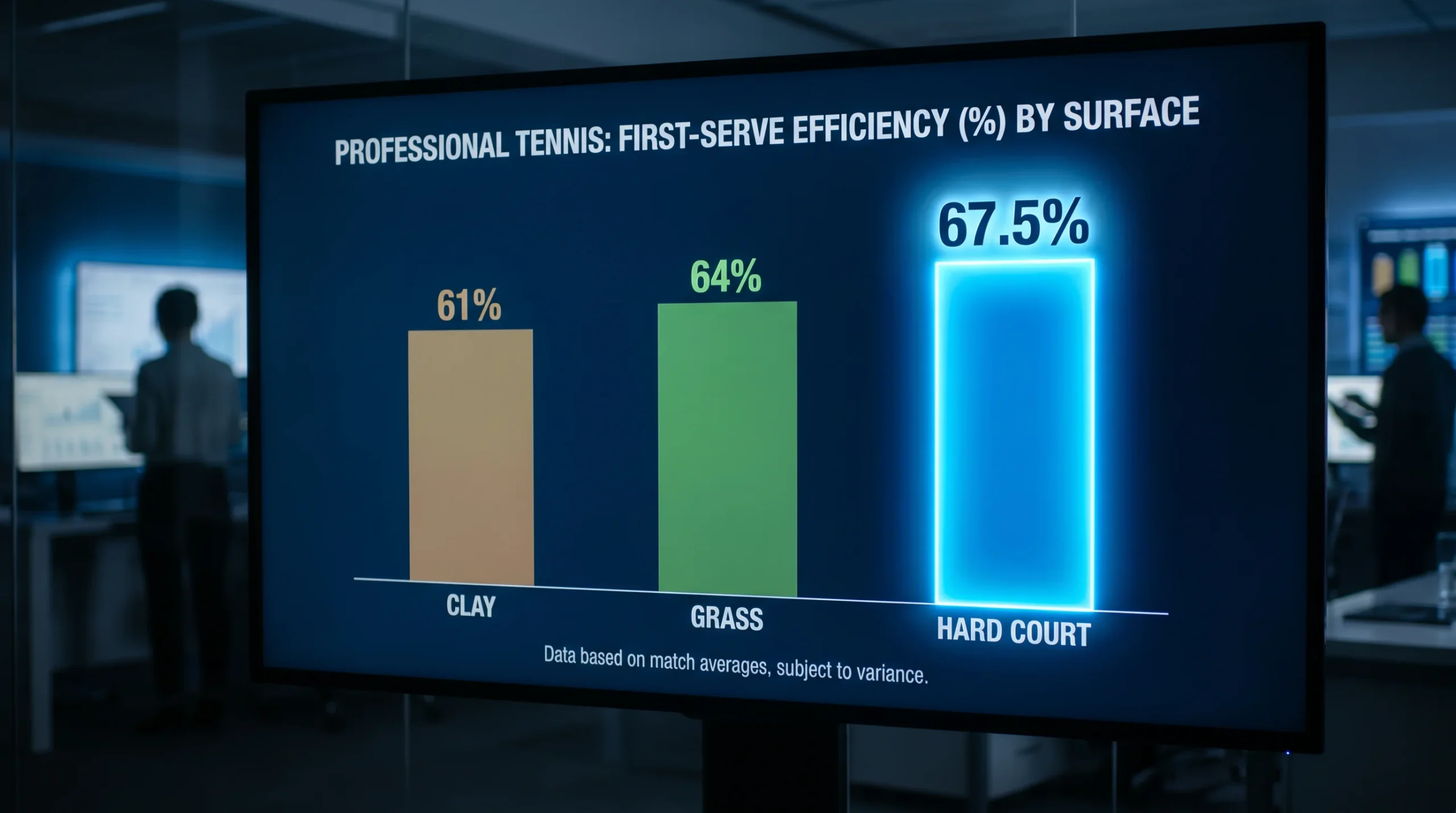
The upset rate on hard courts reflects this statistical moderation. Clay produces approximately 15% more upsets than grass, with hard courts falling between the two. Higher-ranked players tend to perform more consistently on hard courts because the surface rewards the complete game that earned them their ranking in the first place. Clay can neutralise a big serve; grass can neutralise a strong baseline game. Hard courts neutralise less, which means the pre-match favourite converts more often – a pattern that has direct implications for how you approach match-winner and handicap markets.
Indoor vs Outdoor Hard Courts: Speed Differences That Affect Odds
The single most underappreciated distinction in tennis betting is the gap between indoor and outdoor hard courts. They share the same surface category in most databases, but they play like different surfaces. Indoor hard courts are typically faster – no wind, no sun, consistent conditions – and the controlled environment amplifies serve advantage. Outdoor hard courts play slower, particularly in heat where the ball expands slightly and the court surface generates more friction.
I maintain separate model parameters for indoor and outdoor hard courts, and the difference in predictive accuracy is substantial. Random-forest models that treat all hard courts identically achieve above 80% accuracy on match outcomes in controlled studies. When I split the training data into indoor and outdoor subsets, the accuracy on each subset improves by roughly 2-3 percentage points – a margin that translates directly into better probability estimates and more reliable value identification.
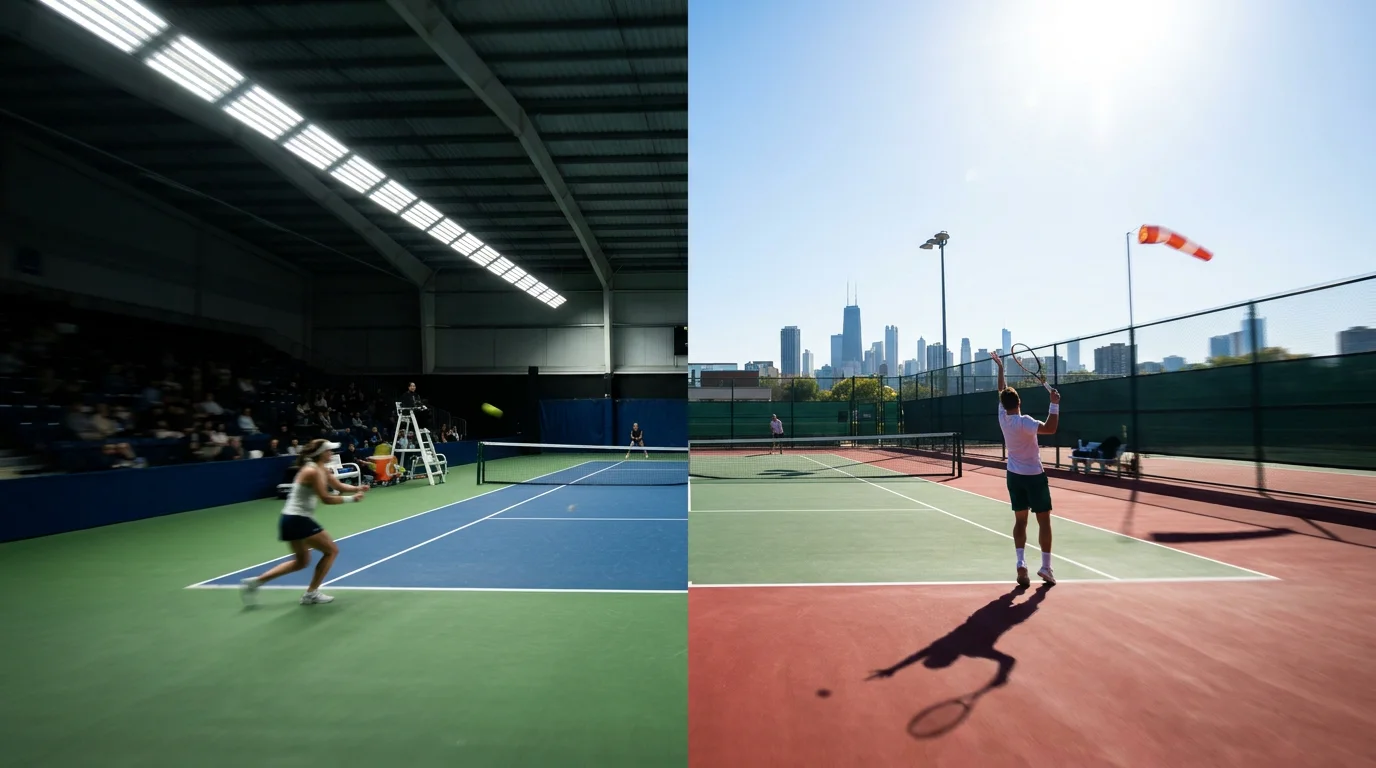
The practical implications are significant. Big servers who are marginal on outdoor hard courts become genuine threats indoors. The serve speed is effectively amplified by the faster court and lower bounce, and the absence of weather variables removes the external disruption that can interrupt a server’s rhythm. Conversely, defensive baseliners who thrive outdoors – where longer rallies and physical endurance matter more – often struggle indoors against aggressive players who dictate with the serve.
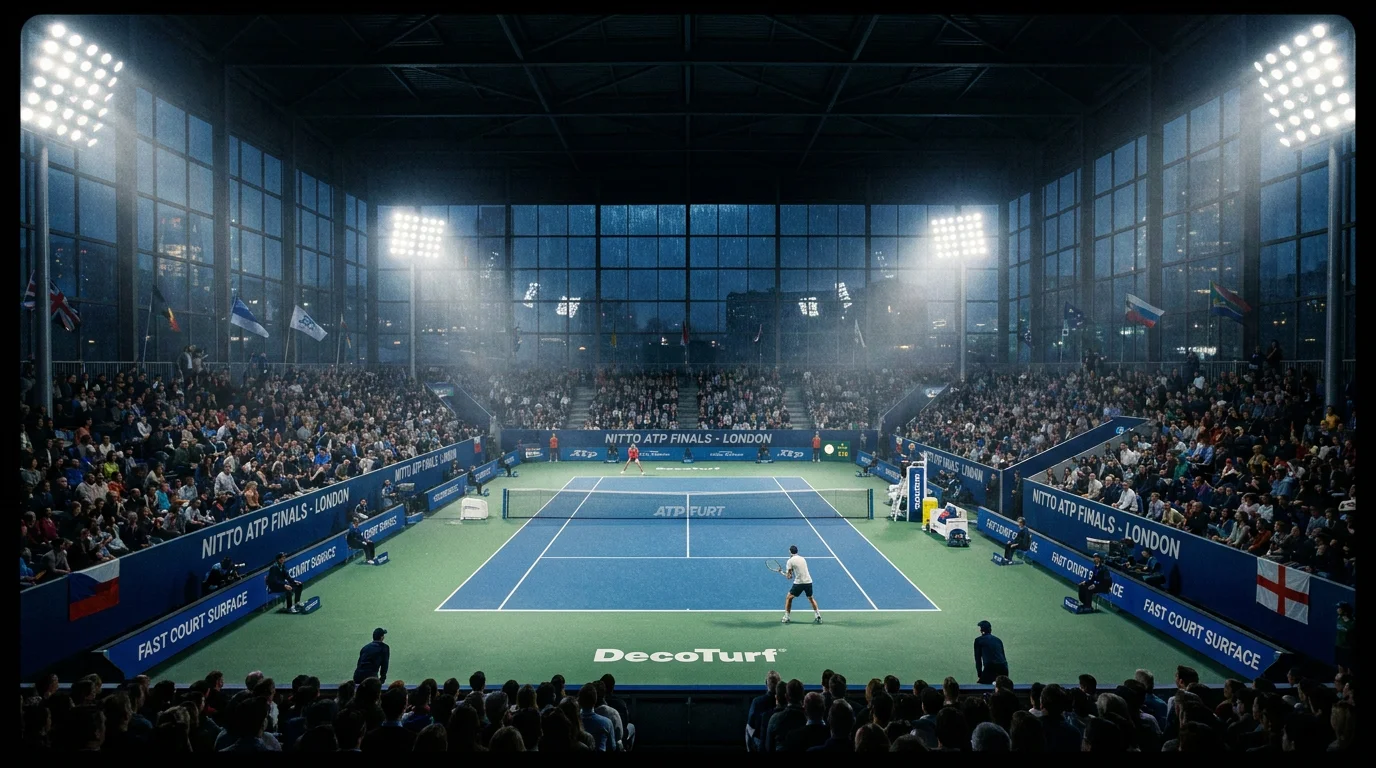
When transitioning between outdoor and indoor hard-court seasons – typically in October as the tour moves to the Asian and European indoor swing – the market adjusts slowly. Rankings and recent form from the outdoor season carry forward in the market’s pricing, but the playing conditions have changed materially. I find this transition window to be one of the most profitable periods of the year, second only to the clay-to-grass shift. Players with strong serve numbers and aggressive court positioning are systematically underpriced during the first two weeks of indoor play.
Hard Courts Dominate the Calendar: Implications for Bettors
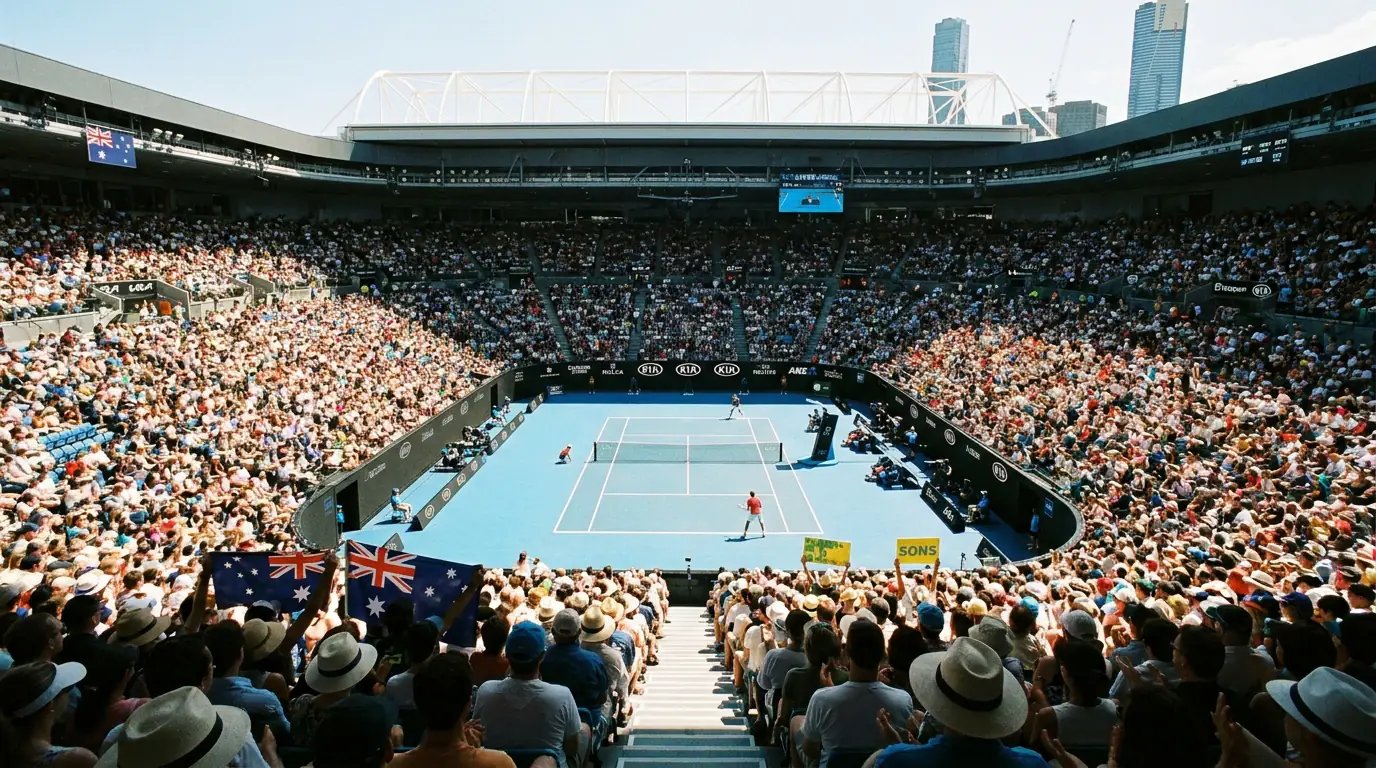
The 2026 Australian Open drew more than 1.2 million spectators – a new attendance record – and that event is just the opening salvo of a hard-court calendar that stretches across most of the season. The Australian Open and US Open bookend a year that includes hard-court Masters events in Indian Wells, Miami, Montreal/Toronto, Cincinnati, and Shanghai, plus dozens of 250 and 500 events on the same surface. For bettors, this dominance has three practical consequences.
The first is data richness. Because most matches across the season are played on hard courts, your models have a continuously refreshed dataset. A player’s hard-court form sample over any three-month window is typically twice the size of their clay or grass sample, which means your probability estimates carry smaller confidence intervals. I find my hard-court model converges to stable predictions faster each year than my surface-specific models for clay and grass.
The second consequence is market efficiency. More data, more matches, and more betting volume mean that hard-court markets are generally tighter than clay or grass markets. The edges are smaller on average, which demands higher volume and more disciplined staking to extract meaningful profit. I compensate by maintaining a lower EV threshold for hard-court bets – 3% rather than my usual 5% – because the higher confidence in my probability estimates justifies accepting narrower margins.
The third consequence is fatigue management. The density of hard-court events means that players are constantly competing, and the physical toll accumulates. Hard courts are harder on the body than clay – the surface offers less give, which increases the strain on joints and muscles. By the late-season indoor swing, fatigue becomes a significant variable. I track each player’s match count and rest days across the hard-court season and apply a fatigue discount to my probability estimates for players who have competed in more than 60 matches by October.

The Australian Open in January presents a unique hard-court dynamic. It is the first Grand Slam of the year, which means early-season form uncertainty collides with a best-of-five format that rewards fitness and match sharpness. Players returning from off-season training camps have limited competitive data, and the models that performed well during the previous season’s indoor swing may not immediately calibrate for the slower outdoor conditions in Melbourne’s summer heat. I approach the first two rounds of the Australian Open with wider confidence intervals than any other hard-court event precisely because the data gap is largest there.
Hard-court tennis betting lacks the narrative appeal of a clay-court upset or a grass-court serve-and-volley masterclass. But it delivers the consistency, the data depth, and the volume that a systematic bettor needs to build long-term profit. The surface that most people call neutral is, in my experience, the surface that rewards disciplined analysis most reliably.
Articles
Created by the "bettennisonline.com" editorial team.
