
Tennis Bet Builder: How to Create Custom Multi-Leg Bets
 Available in US
html
The first bet builder I constructed for tennis felt like a revelation. Instead of choosing between backing the match winner or the over/under on games, I combined both into a single slip alongside a first-set winner selection. Three legs, one bet, a price that looked spectacular. It lost, of course – the first set went against me and everything unravelled. But the idea stayed with me, and over the years I have developed a much more disciplined approach to these multi-leg constructions that accounts for correlation, pricing, and the structural quirks of tennis scoring.
Bet builders – sometimes called same-game multis or request-a-bet features – allow you to combine multiple selections from the same match into a single wager. Tennis accounts for roughly 3.5% of UK online bookmaker gross gambling revenue, a figure that has grown 24.5% since 2021, and bet builders are one of the product features driving that expansion. The appeal is obvious: higher combined odds from a single match. The danger is equally obvious: correlated legs that operators price as though they are independent, meaning the combined odds overstate your actual probability of winning.
Contents
How Tennis Bet Builders Work: Legs, Correlation and Pricing
I had a conversation last year with a data analyst who works in bookmaker pricing, and he described bet builder margins as “the best deal in the house – for the house.” That stuck with me. The mechanics are straightforward on the surface. You open a match, select two or more outcomes from the available markets, and the operator generates a combined price. Behind the scenes, the pricing engine is making assumptions about how those outcomes relate to each other – assumptions that are rarely transparent to the bettor.
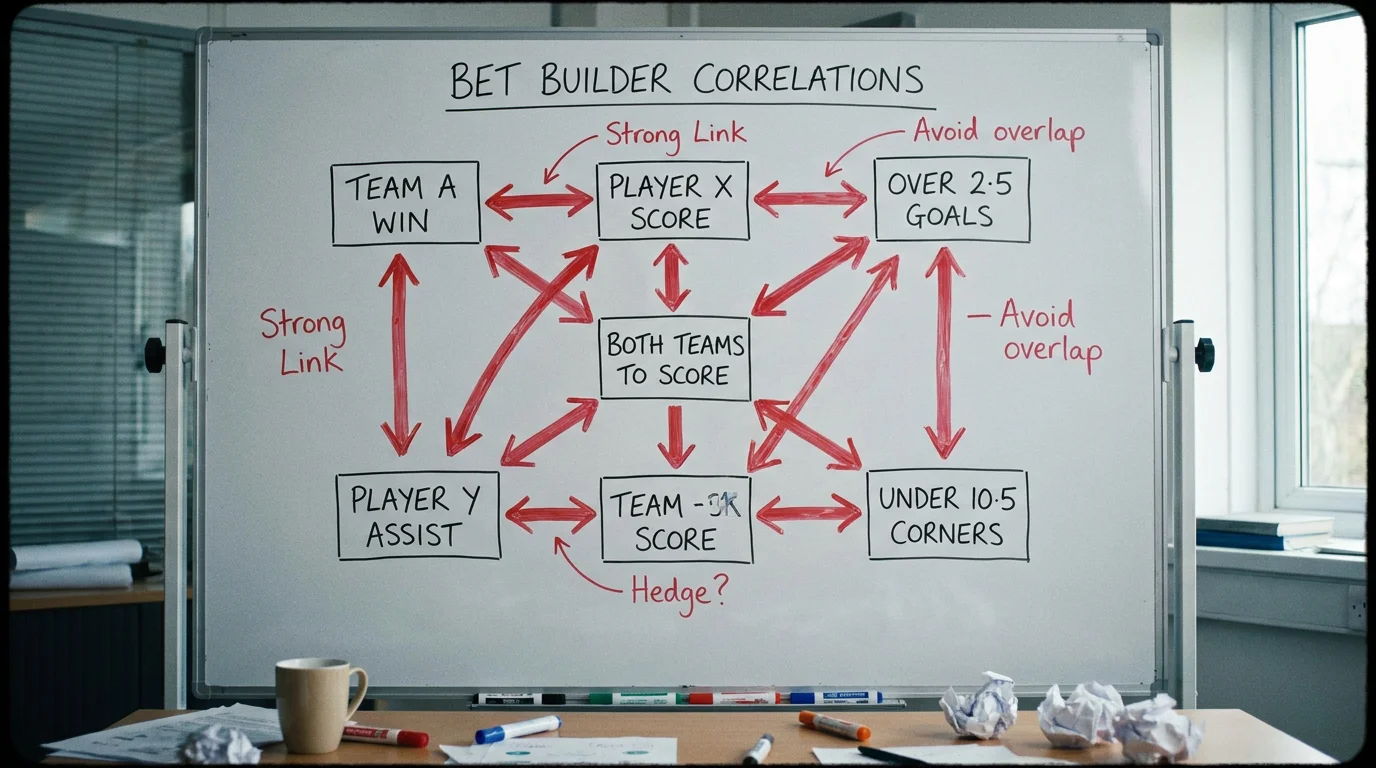
The critical concept is correlation. In a tennis bet builder, many legs are not independent. If you select Player A to win the match and over 22.5 total games, those outcomes are correlated – a tight, competitive match that goes to three sets is more likely to produce both a specific winner and a high game total than a straight-sets blowout. If the pricing engine treats these legs as independent and simply multiplies the individual odds, the combined price is wrong. It will be too generous in some cases and too stingy in others, depending on the direction of the correlation.
Most major operators now use correlation matrices to adjust bet builder pricing. They reduce the combined odds when positive correlation exists – when one leg makes another more likely – and increase them when negative correlation is present. But these adjustments are estimates, not precise calculations, and they build in margin. The operator’s margin on a bet builder is typically higher than on any individual market within it. I have compared bet builder prices to the theoretical fair value of the same combinations using my own probability models, and the overround on a three-leg tennis bet builder averages 15-20% in my experience – substantially higher than the 5-8% overround on a standard match-winner market.
Understanding this pricing dynamic does not mean avoiding bet builders entirely. It means being selective about which combinations you construct and honest about whether the combined price genuinely represents value or merely looks attractive because the headline number is large.
Selecting Legs That Complement Rather Than Contradict
The biggest mistake I see in tennis bet builders is contradictory logic. A bettor selects Player A to win the match, Player A to win the first set, and under 21.5 total games – all in the same slip. Think about what that combination requires: Player A must win the first set, win the match, and do both in fewer than 22 total games. That almost certainly means a straight-sets victory with at least one one-sided set. The individual legs might each look reasonable, but the combined scenario is far less likely than any single leg suggests.

My approach to leg selection starts with a scenario rather than a market. Before opening the bet builder, I ask: what is the most likely way this match plays out? If I believe Player A will win a competitive three-setter, I build legs that align with that scenario. Player A match winner, over 22.5 games, and perhaps both players to win a set if that market is available. Each leg reinforces the same narrative rather than pulling in different directions.
Two-leg builders are underrated. The temptation is always to add a third or fourth leg because the combined odds look more exciting. But every additional leg multiplies not just the odds but the probability of failure. A two-leg combination with genuine analytical support – match winner plus a total-games selection based on serve data and surface conditions – is a far more disciplined approach than a four-leg construction that requires four things to go right simultaneously.

I also pay attention to which legs the operator makes available. Accumulator structures across different matches involve independent events, but bet builder legs within a single match are inherently dependent. If an operator offers a combination that seems unusually generous, ask yourself why. The answer is usually that the correlation between those legs makes the combination less likely than the independent odds suggest, but the pricing has not fully reflected that correlation – or more commonly, the pricing has reflected it and then added a healthy margin on top.
Common Bet Builder Pitfalls in Tennis
Three years ago, I tracked every tennis bet builder I placed over a six-month period. The results were sobering. My strike rate on match-winner bets during the same period was 57%. My bet builder strike rate was 19%. The edge I had on individual markets was being destroyed by the compounding effect of multiple legs and the inflated margins operators charged for combining them.

The first pitfall is chasing price. A three-leg tennis bet builder might return 6.00, which looks like tremendous value compared to backing the match winner alone at 1.60. But the comparison is misleading. The 6.00 price requires three outcomes to occur, and the combined probability of all three is far lower than any individual probability. You need to assess whether 6.00 represents positive expected value for the specific combination – and often it does not.
The second pitfall is ignoring set-by-set variance. Tennis is the most volatile major sport at the set level. A player can lose the first set 6-1 and win the next two 7-5, 6-4. Any bet builder leg that depends on first-set performance introduces significant variance because a single set is a small sample of a player’s overall match-level ability. First-set winner markets carry wider margins than match-winner markets for precisely this reason, and incorporating them into a bet builder compounds the cost.
The third pitfall is treating bet builders as entertainment rather than analysis. Tennis betting turnover is roughly 8% of the UK sports market, and bet builders are disproportionately popular among recreational bettors who enjoy the engagement of tracking multiple outcomes within a single match. There is nothing wrong with that – betting is entertainment for most people. But if your goal is long-term profit, bet builders should be rare, disciplined constructions backed by genuine analytical conviction, not a habit.

My current approach is to place bet builders only when I have a strong view on the match scenario, when the combination involves no more than two or three complementary legs, and when the combined price exceeds my estimated fair value by at least 10%. That filter means I place one or two tennis bet builders per week at most. The rest of my activity stays in single-market bets where the margins are lower and my edge is easier to quantify.
Articles
Published by the bettennisonline.com team.
