
Wimbledon Betting Odds: Grass-Court Dynamics and Value Opportunities
 Available in US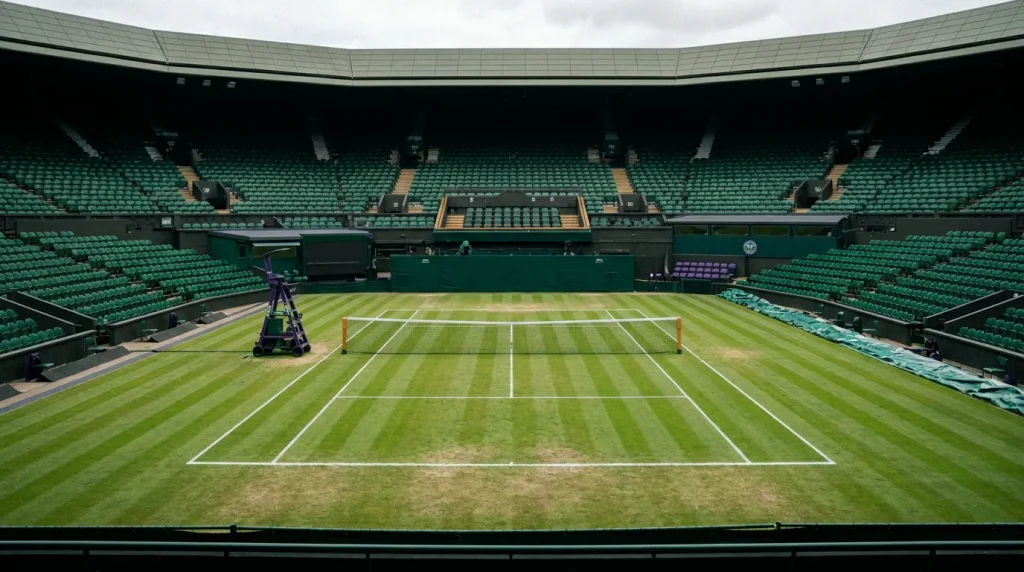
html
Wimbledon is the tournament every casual tennis fan knows, and that popularity creates a specific problem for bettors: the public money floods in, the odds tighten, and the value migrates to places most people do not look. I have covered Wimbledon from a betting perspective for nine consecutive years, and the pattern repeats: the headline markets on the top seeds are efficiently priced to the decimal, while the secondary markets — set betting, match handicaps, first-set totals — contain pockets of consistent mispricing driven by the unique characteristics of grass-court tennis.
Understanding Wimbledon odds requires understanding grass. Everything in this market flows from the surface.

Contents
Wimbledon’s Betting Market: Prize Money, Prestige and Volume
The 2026 Championships carried a record prize fund of £53.55 million — a 7% increase on the previous year. Singles champions took home £3 million each. That prize money reflects Wimbledon’s commercial weight, and the betting market mirrors it: Wimbledon generates some of the deepest tennis betting pools of the year, with outright markets opening months in advance and attracting serious money from institutional bettors, syndicates, and recreational punters alike.
Sportradar extended its multi-year deal for official data and audiovisual betting rights at Wimbledon in June 2026, meaning three of the four Grand Slams now feed their real-time data through Sportradar’s infrastructure. For bettors, this matters because the data quality behind live odds at Wimbledon is best-in-class. The point-by-point feed that drives in-play pricing is faster and more reliable than at many other tournaments, which makes the in-play markets tighter but also fairer — you are less likely to be caught by a data lag exploited by faster operators.
Where the volume creates opportunity is in the sheer number of available markets. During Wimbledon fortnight, UK bookmakers offer more tennis markets than at any other time of year: match winner, set betting, correct score, game handicaps, total games, first-set winner, first-set total, individual set totals, player props, and tournament specials. Not all of these markets are equally well-priced. The match-winner market attracts the most liquidity and is the most efficient. The deeper you go into secondary markets, the thinner the trading and the wider the potential for mispricing.
How Grass Shapes Wimbledon Odds and Upsets
First-serve efficiency on grass runs at 64.2% — higher than clay’s 62.4% but lower than hard court’s 67.5%. That middle position might suggest grass is an average surface, but the distribution of outcomes tells a different story. Grass-court tennis is not average; it is extreme in ways that are masked by aggregate statistics.
The low, fast bounce on grass amplifies serve advantage. Aces and unreturnable serves are more frequent. Points are shorter. Sets are more likely to go to tie-breaks because both players hold serve more easily. That tie-break frequency is critical for betting: a 7-6 set produces 13 games regardless of which player wins it, and the outcome is decided by a few points of marginal quality. This makes grass-court match outcomes more sensitive to small fluctuations in performance than on any other surface.

The upset dynamics at Wimbledon follow from this structure. Upsets on grass are less frequent overall — roughly 15% fewer than on clay — but when they happen, they tend to happen quickly. A big-serving underdog can ride a hot service day to a straight-sets upset that the pre-match odds rated at 8/1 or longer. These upsets are not grind-it-out affairs; they are blitz attacks enabled by the surface. For handicap and set betting, this means the 2-0 underdog upset scoreline carries more probability at Wimbledon than the prices usually reflect.
The connection between grass-court dynamics and broader grass court betting strategy extends beyond Wimbledon, but the Championships are where the principles are most visible because the sample size is largest and the market attention is highest.
Draw Timing, Weather Delays and Other Wimbledon Variables
Wimbledon’s draw is released on the Friday before play begins, and the market reaction is immediate. Players with kind paths see their outright odds shorten within minutes; those drawn into loaded quarters drift. If you intend to bet outright on Wimbledon, the draw release is the single most important moment in your calendar. Being ready to act in the first 30 minutes after the draw is posted — before the market fully adjusts — is where the sharpest pre-tournament value exists.

Weather at Wimbledon is a variable that no other Grand Slam shares to the same degree. The Australian Open has heat; Roland-Garros has occasional rain; the US Open has humidity and wind. But Wimbledon has the full British weather spectrum: rain delays that stretch matches across two days, overcast conditions that slow the court and assist the returner, and occasional heatwaves that dry the grass and speed the surface up as the fortnight progresses.
The roof on Centre Court and Court No. 1 adds another layer. When the roof closes, the court plays faster because the ball travels through still air with no wind resistance. Serve speeds increase, rallies shorten, and the odds shift toward the bigger server. I have seen in-play odds move 15% within a single service game after a roof closure, as the market reprices the match dynamic in real time. If you are trading Wimbledon in-play, monitoring weather reports and roof-closure decisions is not optional — it is a core part of the strategy.

One Wimbledon-specific factor that most guides overlook: the surface degrades as the tournament progresses. Week-one grass is lush and relatively slow; week-two grass is worn, patchy, and faster. This means the surface conditions in the final are materially different from those in the first round. A player whose game suits slower grass may dominate the early rounds but struggle as the surface speeds up in the second week. Tracking this progression — and noting which players have historically performed better in week two — is an edge that very few bettors incorporate into their analysis.

Articles
Written by the editors at bettennisonline.com.
