
Tennis Outright Betting: Backing Tournament Winners Before Play Begins
 Available in US
html
The best outright bet I ever placed was on a player ranked 15th in the world to win a Masters 1000 event on clay. The outright odds were 20/1 before the draw was released. After the draw came out, revealing a kind path through the early rounds and a potential semi-final against an opponent she had beaten four times consecutively, the odds shortened to 10/1 within hours. That gap — 20/1 to 10/1, just because of the draw — is where outright betting lives. The question is always about timing.
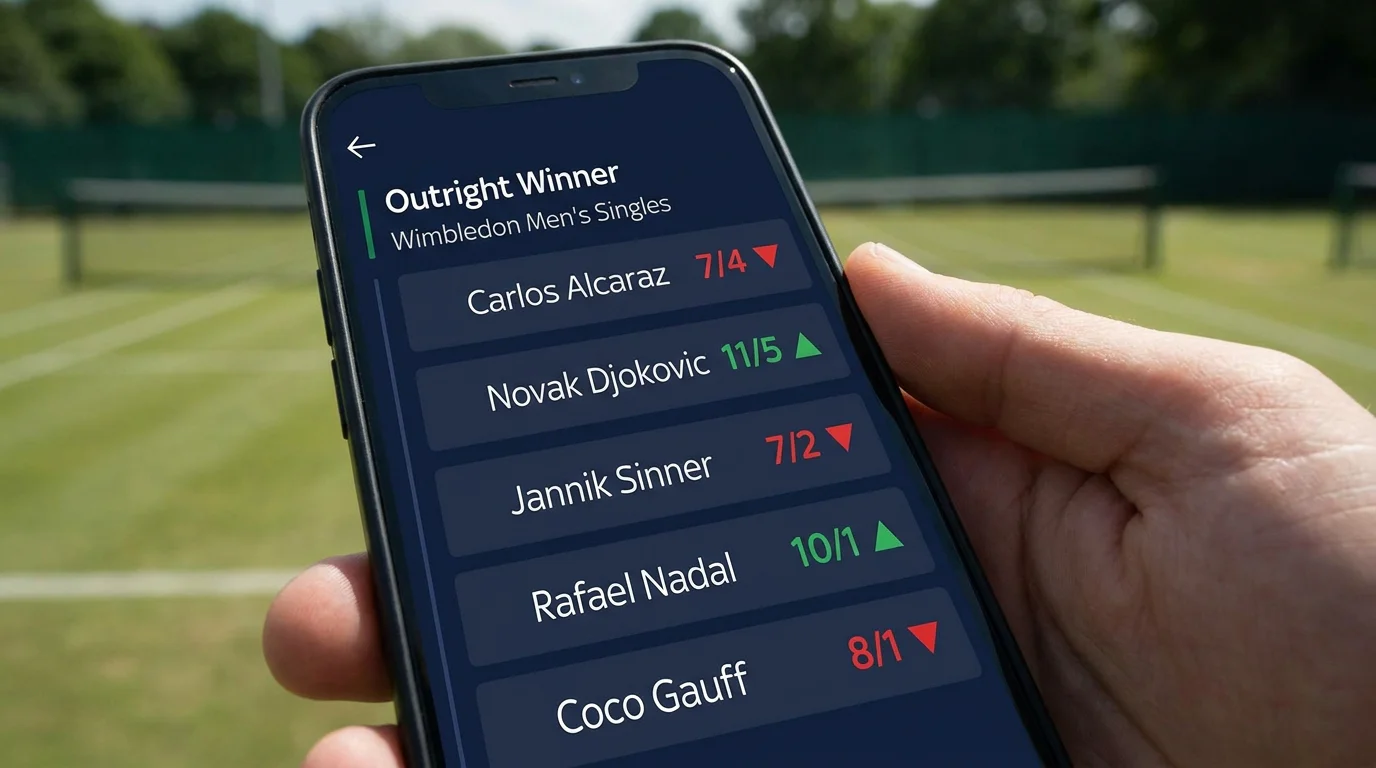
Outright markets ask you to pick the tournament winner, full stop. No match-by-match decisions, no set scores, no handicaps. You make one selection before the first ball is hit and wait — sometimes for two weeks at a Grand Slam — for the result. It is the most patient form of tennis betting, and patience is precisely what most bettors lack.
Contents
How Outright Markets Work in Tennis
Outright markets open weeks before a tournament begins, typically when the entry list is confirmed. The initial prices are based on world ranking, recent form, surface record, and historical performance at the specific event. Wimbledon’s record prize fund of £53.55 million in 2026 — including £3 million for each singles champion — reflects the tournament’s stature, and that stature drives the deepest outright markets of any event on the calendar.
Each player in the field receives a price. The top seed might be 2/1, the second seed 3/1, and prices extend out to 500/1 or longer for qualifiers and wild cards. The combined implied probabilities of all players will exceed 100% — sometimes by 30-40% in tournaments with large fields — because the bookmaker builds margin into every price. That overround is the cost of doing business in outright markets, and it is why finding genuine value requires more than just picking the best player.
Settlement is binary: your player wins the tournament or they do not. If they withdraw before their first match, most UK bookmakers refund outright bets. If they retire during a match, they are out of the tournament and the bet loses. This withdrawal policy varies between operators — some have a “play one match” threshold, others refund until the first-round draw deadline — so check the specific terms.
Using Draw Analysis to Inform Outright Selections
The Australian Open in 2026 drew more than 1.2 million spectators to Melbourne Park — a new attendance record. That scale of event generates massive outright markets, and the draw structure at a 128-player Grand Slam is where analytical bettors separate themselves from the crowd.
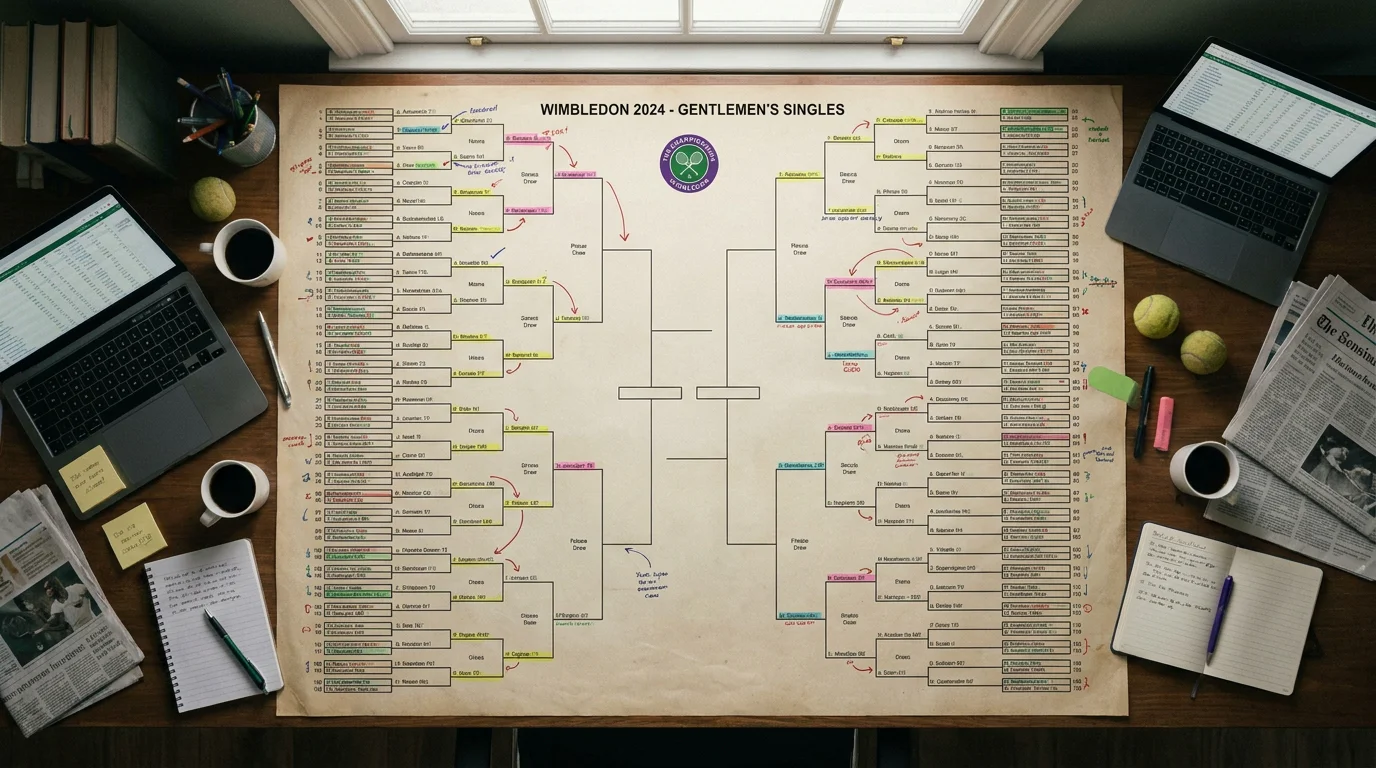
Draw analysis works in two directions. First, you assess the path: which opponents will your selection face in the early rounds, and how difficult is the projected quarter-final and semi-final? A top seed drawn into a quarter loaded with dangerous floaters — players ranked 15th to 30th with strong surface form — faces a harder path than one whose quarter contains mostly lower-ranked opponents. The difference in path difficulty is not fully reflected in the outright odds because most casual bettors back names, not paths.
Steve Dimopoulos, Victoria’s Minister for Tourism, described the 2026 Australian Open as breaking records with over a million fans flocking to Melbourne Park. That scale drives betting volume, but the volume itself creates inefficiency. When millions of pounds pour into outright markets, the public money gravitates toward the top two or three seeds, leaving the odds on players ranked 5th to 15th comparatively generous. This is the sweet spot for outright value: players good enough to win but not popular enough to be overbet.

Second, draw analysis considers the scheduling implications. At Grand Slams, being on the “top half” or “bottom half” of the draw determines which day you play in each round. If extreme heat or rain is forecast for specific days — relevant at the Australian Open and Roland-Garros — one half of the draw may face materially different conditions than the other. This asymmetry is invisible in the outright odds but very real in its impact on match outcomes.
When to Place an Outright: Pre-Draw vs Post-Draw Value
This is the timing question that every outright bettor wrestles with, and after eleven years I still do not have a universal answer. What I have is a framework.
Pre-draw outrights offer the longest odds because they carry draw uncertainty — you do not know the path. If the draw turns out to be kind, you hold a bet at a price that no longer exists. If the draw is brutal, you are stuck with a position that the market has already repriced. The risk-reward ratio favours pre-draw betting when you have identified a player whose surface form and fitness suggest they will contend regardless of the draw. Players who win on pure quality rather than favourable matchups are the strongest pre-draw candidates.
Post-draw outrights offer shorter odds but better information. You can see the path, identify potential upsets in other quarters that might open the draw, and assess the realistic probability of your selection reaching the final. I typically split my outright betting: one pre-draw bet on a player I believe in structurally, and one post-draw bet based on draw analysis. The pre-draw bet has a higher ceiling; the post-draw bet has a higher floor.

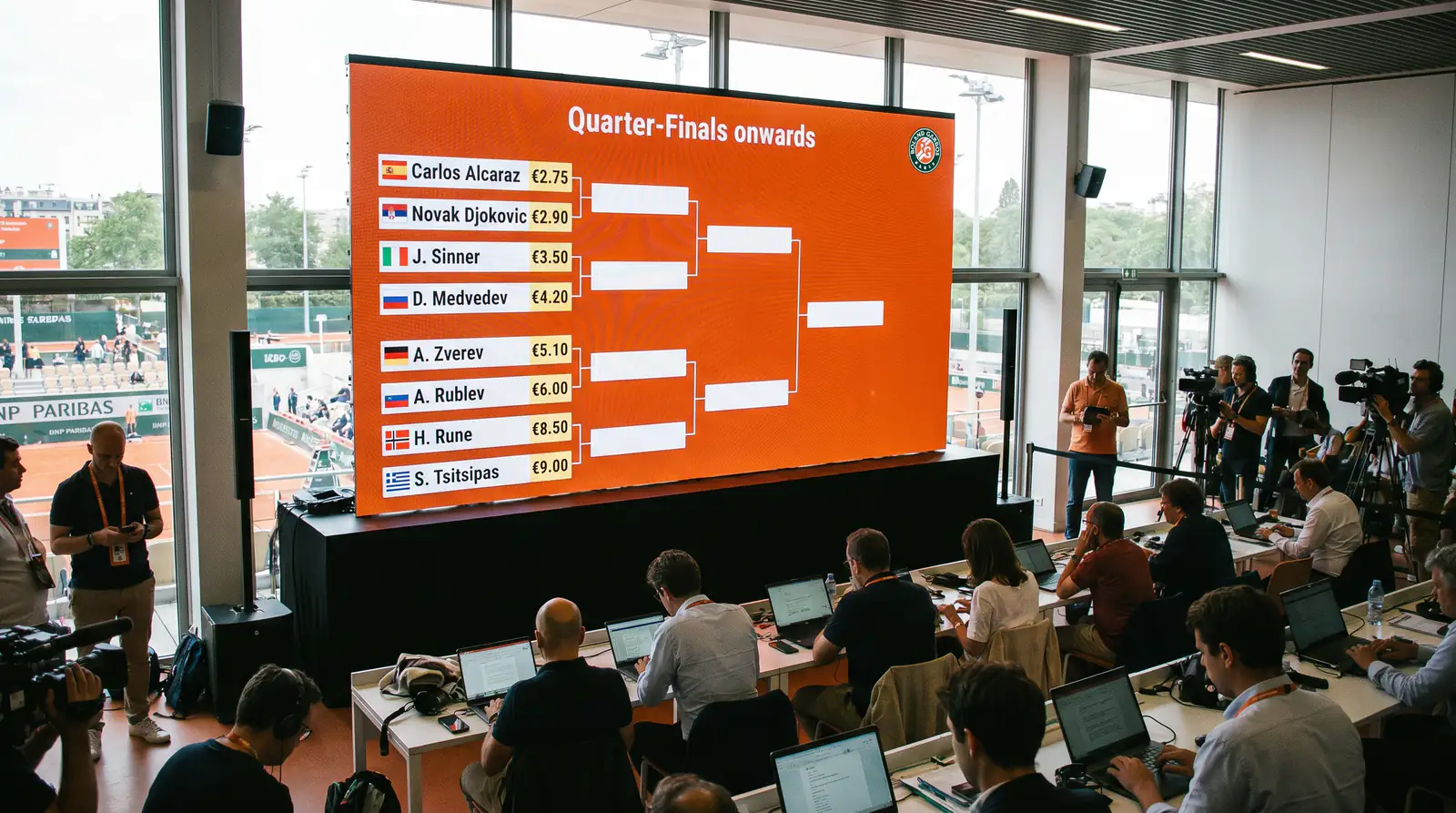
One timing trap to avoid: placing outright bets during the tournament itself. Some bookmakers offer in-running outright markets after each round, and the odds on surviving players shorten as the field thins. By the quarter-final stage, the value in outright betting is usually gone — the remaining players are priced close to their true probability, and the overround is tighter because fewer players remain. If you have not placed your outright before the first round, the window for value has largely closed. The connection between outright positions and longer-term futures betting is worth understanding, because the capital-management principles overlap even though the time horizons differ.
Articles
Published by the bettennisonline.com team.
